Why Dunbeath Is the Slow Travel Destination Scotland Has Been Waiting For
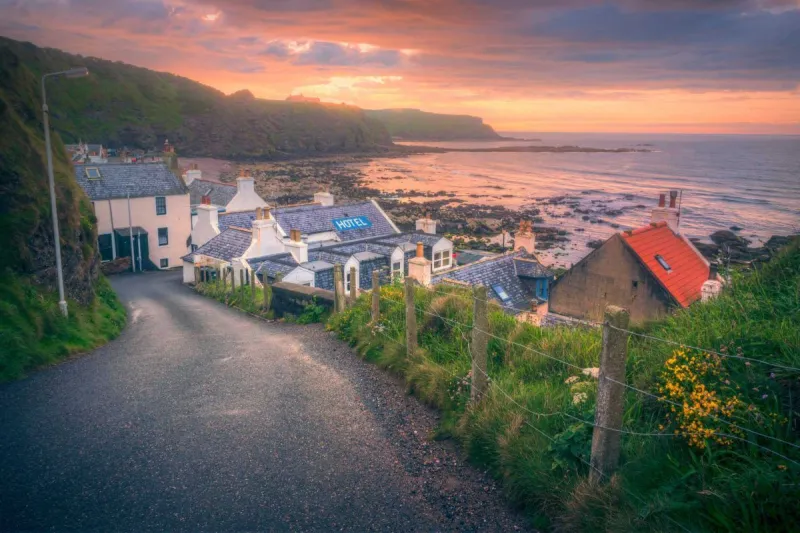
Photo: peaceful Scottish coastal village harbour calm slow travel, via i.pinimg.com
Somewhere between the third overpriced coffee of a whistle-stop Edinburgh weekend and the fourteenth photograph taken purely for Instagram, a lot of British travellers have started asking themselves a fairly fundamental question: is this actually enjoyable?
The slow travel movement — which prioritises depth over breadth, presence over productivity, and genuine connection over curated experience — has been one of the more meaningful shifts in UK holiday culture since the pandemic. People want fewer places visited more thoroughly. They want to feel somewhere rather than simply see it.
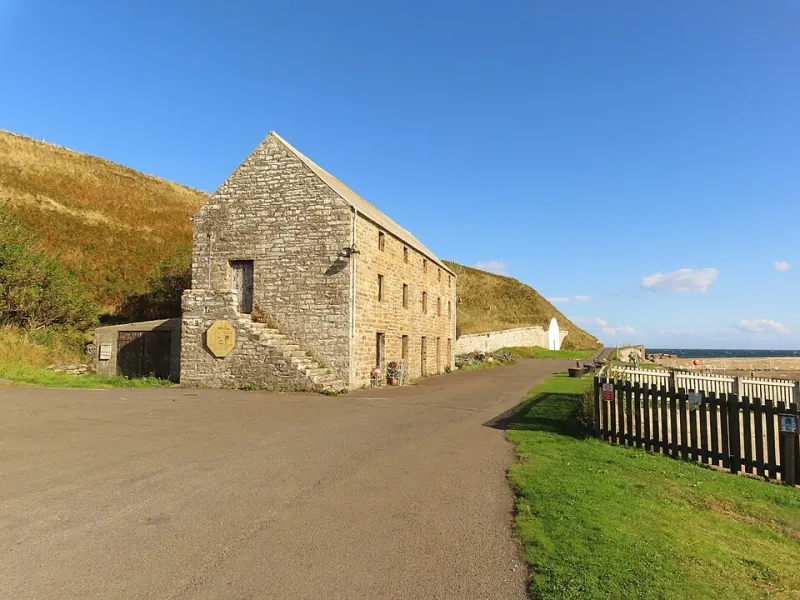
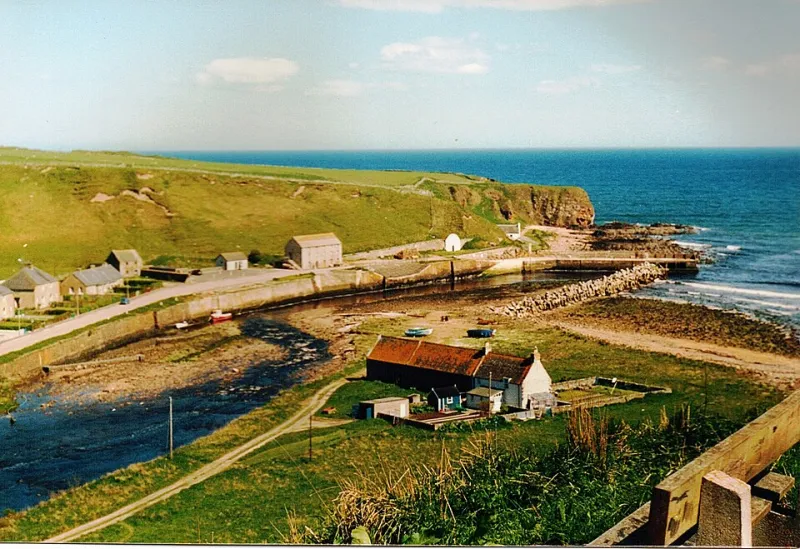
Dunbeath, a small fishing village on the Caithness coast where the Highlands meet the North Sea, might not be the first name that comes to mind when you're planning a slow travel escape. That, frankly, is a large part of its appeal. Here's why it should be at the top of your list.
1. The Scale Is Human
Slow travel works best in places small enough to actually know. Dunbeath has a population you could comfortably fit in a modest village hall, and that intimacy is not incidental — it's the whole point.
In a village this size, the person serving you at the local shop is also the person who can tell you where the seals haul out at low tide. The farmer you pass on the road knows which field the short-eared owls are hunting this season. There's no layer of tourist infrastructure between you and the place itself — no branded experience, no choreographed authenticity. Just a community going about its life, generally quite happy to talk to curious visitors who take a genuine interest.
This is something that larger, better-known Scottish destinations — Inverness, Fort William, even Ullapool — simply cannot replicate. They've grown too big for that kind of intimacy. Dunbeath hasn't, and the result is a visitor experience that feels genuinely mutual rather than transactional.
2. The Natural World Sets the Pace
One of the quiet frustrations of conventional holidays is that the schedule remains essentially artificial — check-in at three, checkout at eleven, dinner at seven. In Dunbeath, the natural world gently imposes its own timetable, and surrendering to it is one of the more liberating things you can do.
The tides dictate when the harbour is at its most atmospheric and when the rock pools are accessible. The light in this far north latitude shifts in ways that reward patience — the long summer evenings that stretch towards midnight, the extraordinary quality of winter light on clear days, the way sea mist transforms the clifftops into something from a different century altogether.
Birdlife follows its own seasonal rhythms entirely indifferent to your itinerary. Slow down enough to notice, and you'll find the days organise themselves around natural events rather than tourist attractions — which turns out to be considerably more satisfying.
3. The Senses Get a Proper Workout
Modern British life — particularly urban British life — is predominantly visual and auditory in ways that are increasingly screen-mediated. Dunbeath offers something that has become genuinely rare: an environment that engages all five senses simultaneously and without digital competition.
The smell of salt and kelp at the harbour. The texture of ancient flagstone underfoot on the path down to the beach. The particular sound of the Dunbeath Water meeting the sea — that constant, rushing conversation between river and tide. The taste of something smoked or foraged that came out of this specific landscape rather than a distribution warehouse in the Midlands.
Slow travel theory holds that sensory richness is one of the key mechanisms through which travel actually changes us — and Dunbeath delivers it in abundance. You arrive with your nervous system calibrated to the pace of modern life and you leave with it recalibrated to something considerably older and more sustainable.
4. The Digital Noise Fades Out Naturally
Let's be honest: most of us don't actually disconnect from our phones on holiday. We intend to, we promise ourselves we will, and then we don't, because the infrastructure of modern connectivity is designed to make disconnection feel like deprivation.
Dunbeath offers a gentler version of this. Mobile signal is patchy in the strath and on the moorland above the village. The wifi in accommodation tends to be functional rather than fibre-fast. These are not, it's worth saying, complaints — they're features.
When connectivity becomes intermittent rather than constant, something interesting happens to attention. It starts defaulting to what's actually in front of you. The view from the clifftop path. The conversation at dinner. The book you brought and hadn't opened until now. Dunbeath doesn't force a digital detox — it just creates the conditions in which one becomes possible, even natural.
5. Genuine Curiosity Is Rewarded Here
The most important quality a slow traveller can bring to any destination is curiosity — the willingness to ask questions, follow tangents, and let the place reveal itself rather than consuming it according to a predetermined plan. Dunbeath rewards this more generously than almost anywhere else in Scotland.
The landscape is layered with history that repays investigation: Neolithic cairns on the moorland, an Iron Age broch site near the castle, the complex social history of the herring boom, the literary legacy of Neil Gunn, whose childhood here gave Scottish literature some of its most luminous pages. None of this is presented to you — you have to go looking for it. And the going-looking is, as it turns out, the best part.
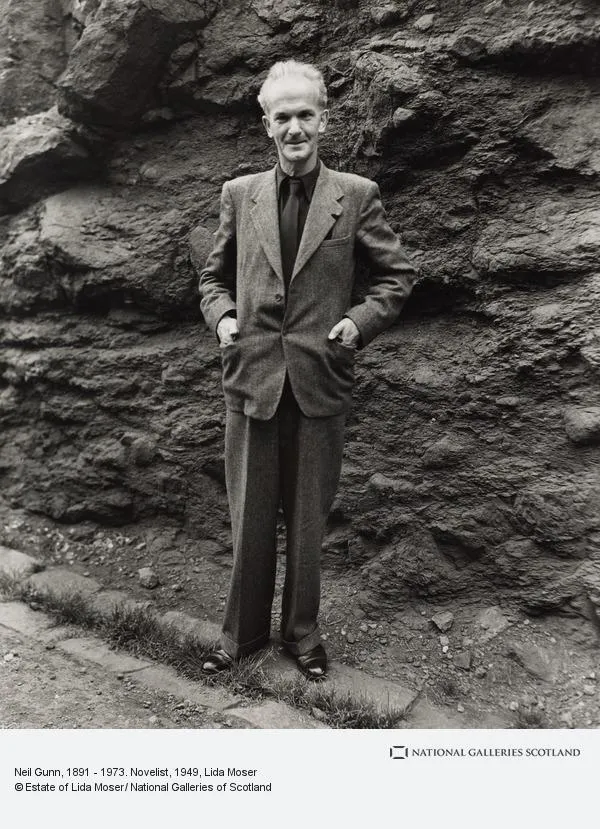 Photo: Neil Gunn, via www.nationalgalleries.org
Better-known Scottish destinations have largely solved the problem of curious visitors by packaging the answers in advance. Dunbeath hasn't done that yet, and hopefully never will. The questions you arrive with are still genuinely open ones, and that's a rarer gift than it sounds.