Cooking the Caithness Way: Traditional Highland Recipes Rooted in the Dunbeath Kitchen

Photo: Scottish Government, CC BY 2.0, via Wikimedia Commons
The most honest food in Scotland has never been on a restaurant menu. It's been made in farmhouse kitchens and croft cottages, adapted each season to whatever the land and sea happened to be offering, and shared without ceremony at tables where the conversation mattered more than the presentation. Around Dunbeath, that tradition runs deep — and for visitors who want to take something genuinely meaningful home from their time in Caithness, learning a little of it is one of the most satisfying things you can do.
The ingredients that historically shaped Highland domestic cooking weren't exotic. They were local, seasonal, and determined by necessity. Oats grown on thin northern soil. Root vegetables that survived the climate. Brown trout pulled from the Dunbeath Water. Shellfish gathered from rocks at low tide. Greens foraged from the clifftops and the strath. Herring, caught in extraordinary abundance and preserved in salt or smoke for the months when the boats couldn't go out.
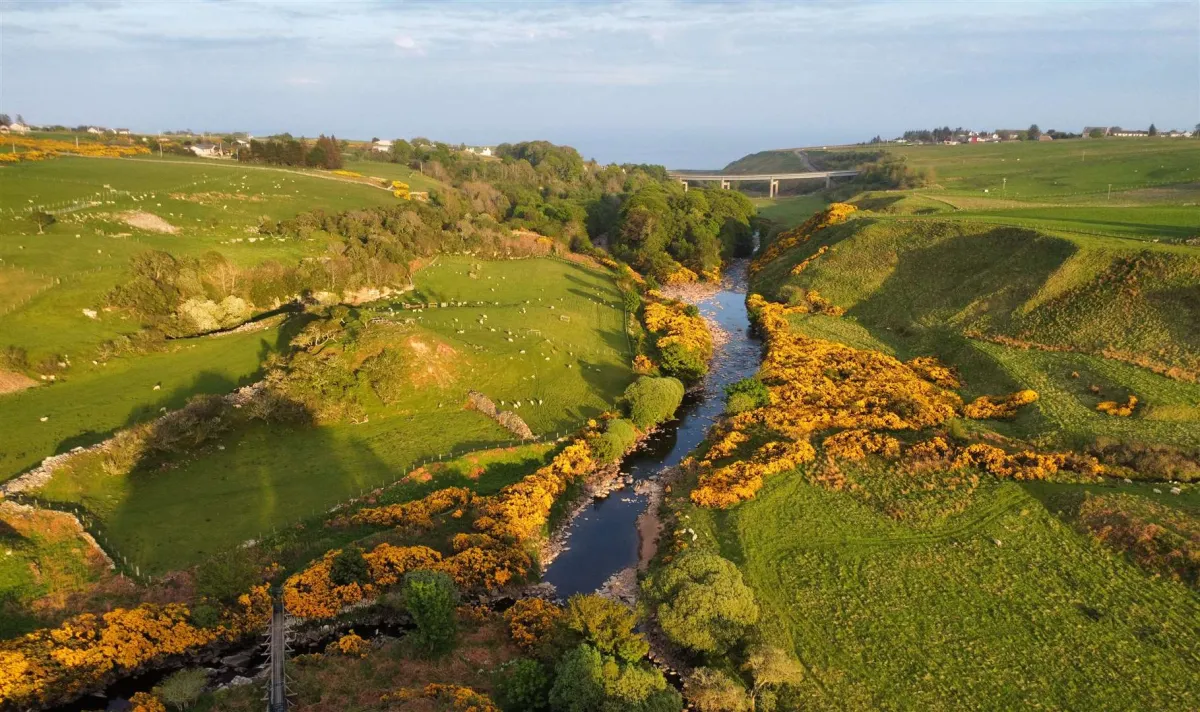 Photo: Dunbeath Water, via www.inverness-courier.co.uk
What this cooking lacks in variety it more than compensates for in depth of flavour and in the kind of honesty that only comes from working with ingredients at their absolute peak of freshness.
Brose and Bannocks: The Oat at the Heart of Everything
If there's a single ingredient that defines traditional Highland cooking, it's the oat — and not in the polite, modern sense of a bowl of porridge with artisan honey. Oats in the old Dunbeath kitchen were a staple of almost heroic versatility.
Atholl Brose (the savoury version, not the whisky drink) was once a staple of Highland working life: raw oatmeal soaked in cold water, left overnight until it swelled into a thick, sustaining paste. It sounds austere, and it is — but eaten with salt and a knob of butter, it has a nuttiness and substance that modern convenience food simply cannot match. Try it once and you'll understand how people doing physical work in a cold climate could fuel an entire morning on a single bowlful.
Oatcakes are the other great oat staple, and the Caithness version has traditionally been thicker and plainer than the decorative varieties sold in delicatessens. The basic recipe is little more than medium oatmeal, a pinch of salt, a little fat — lard, or butter if you were prosperous — and enough hot water to bring it together. Rolled thin, cut into rounds, and baked on a griddle until just dry and lightly golden. Eaten with smoked fish or sharp cheese, they are quietly perfect.
The River's Contribution: Brown Trout from the Dunbeath Water
The Dunbeath Water is one of Caithness's finest small rivers, and it has been feeding the community for as long as people have lived here. Brown trout, the river's great gift, was historically prepared with an admirable lack of fuss.
Potted Trout is perhaps the most traditional method of preservation: cooked fillets packed tightly into a pot or jar with butter, a little vinegar, mace, and black pepper, then sealed with clarified butter to exclude the air. Kept cool, it would last several days — long enough to see a family through a stretch of bad weather. The flavour is concentrated and savoury, excellent on oatcakes or spread onto thick bread.
For a simpler preparation, pan-fried brown trout with oatmeal remains one of the most satisfying things you can cook. Coat fresh trout fillets in seasoned medium oatmeal and fry them in butter until the crust is golden and the flesh just flakes. The oatmeal creates a texture that's crisp without being heavy, and the nutty flavour complements the delicate sweetness of the fish beautifully. It takes about ten minutes and requires almost no skill — which is, of course, exactly the point.
Preserved Herring: The Taste of Highland Winter
For generations of Dunbeath families, salt herring was the food that made winter possible. The great herring harvests of the nineteenth century weren't just an economic phenomenon — they were a domestic one, filling barrels that would sit in every kitchen and outhouse until the following spring.
Salt herring with potatoes — simply boiled together, the salt from the fish seasoning the potatoes as they cook — is one of those dishes that sounds almost too simple to be interesting and turns out to be deeply satisfying. The key is the quality of the herring: if you can find traditionally cured Scottish salt herring from a specialist supplier, the difference from supermarket rollmops is considerable.
Smoked herring (the unglamorous ancestor of the kipper) was another staple, and the smoky, intense flavour it develops through cold-smoking over wood chips is something that has genuinely no modern equivalent. If you visit Dunbeath and have access to a kipper for breakfast, eat it as it comes — perhaps with a little butter and brown bread — and resist the urge to do anything clever with it.
Foraged Greens and Root Vegetables: The Kitchen Garden and Beyond
The hedgerows and clifftops around Dunbeath have always supplemented the kitchen garden. Sea purslane, sorrel, and wood sorrel were gathered for their sharp, bright flavour — used as a seasoning or wilted briefly in butter as a side dish. Nettles, gathered in spring when young and tender, made a soup that was both practical and genuinely delicious: sweat an onion, add stock, throw in a generous handful of young nettles (handle with gloves until they hit the heat), season well, and blend. The result is vivid green, slightly earthy, and surprisingly rich.
Turnip — the swede variety that Scots call turnip and the English call swede — was the great root vegetable of the Highland kitchen, boiled and mashed with butter and black pepper into clapshot (traditionally mixed with mashed potato). It's warming, sustaining, and one of those side dishes that improves almost any plate of meat or smoked fish it accompanies.
Bringing Dunbeath Home
The beauty of this kind of cooking is that it travels well — not physically, but as knowledge. None of these recipes require specialist equipment or hard-to-find ingredients. Good oatmeal is available in every supermarket. Brown trout can be sourced from any decent fishmonger. Nettles grow in most British gardens whether you want them to or not.
What they do require is a willingness to slow down, to work with simple ingredients on their own terms, and to find satisfaction in food that is honest rather than showy. Which, when you think about it, is exactly what a visit to Dunbeath teaches you to do.