What the Cliffs Are Saying: Dunbeath's Sonic Landscape and the Creatives It's Drawing North
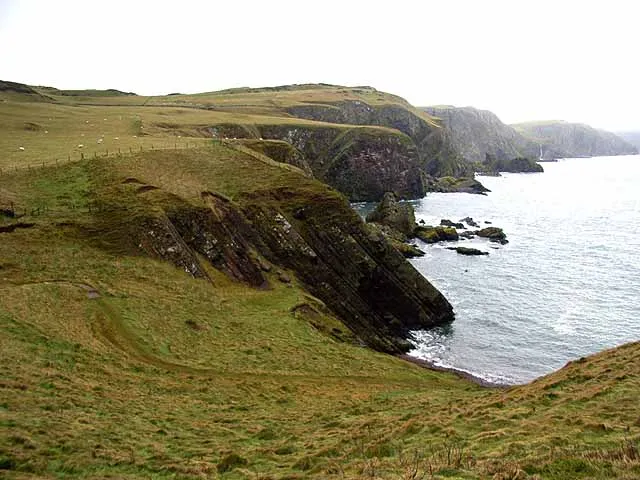
Photo: Oliver Dixon, CC BY-SA 2.0, via Wikimedia Commons
Close your eyes somewhere along the Dunbeath coastline on a blustery afternoon and try to pick apart what you're actually hearing. There's the obvious stuff — waves, wind, the occasional gull. But underneath that, if you slow down and pay attention, there's something stranger going on. The cliffs here have a way of holding sound and releasing it at unexpected angles. The strath amplifies and channels. The harbour creates its own small acoustic chamber where ropes tap against masts and water slaps stone in rhythms that shift with the tide.
For most visitors, this is just atmosphere. For a growing number of composers, field recorders, and experimental musicians, it's the whole reason they made the journey north.
A Place That Sounds Like Nowhere Else
The acoustic character of a landscape is shaped by its physical geography in ways that are surprisingly specific. Dunbeath's combination of steep-sided strath, exposed clifftops, sheltered harbour, and open moorland creates what sound artists sometimes call a "layered" sonic environment — one where different frequencies behave differently depending on where you're standing and what the weather is doing.
Daniel, a Glasgow-based composer who has been making regular trips to Caithness for the past four years, describes it in almost geological terms. "There are places where sound pools," he says. "Down in the strath, particularly in the lower reaches near the sea, you get this quality where the wind drops and everything becomes very still and close. Then you walk fifty metres and you're back in the full blast of it. That contrast — that's what I keep coming back for."
He's not alone. A loose community of sound practitioners has formed around Dunbeath and the wider Caithness area over the past several years, some visiting regularly, others having relocated entirely. They don't constitute an official collective or arts programme; it's more organic than that, a network built on shared recordings swapped over email and occasional conversations in the village.
The Field Recording Tradition
Field recording — the practice of capturing environmental sound with high-quality microphones, often as raw material for music or as artworks in themselves — has a long tradition in experimental music. But there's been a noticeable shift in recent years towards more remote, less obviously dramatic locations. The preference has moved away from iconic soundscapes (busy markets, rainforests, rush-hour cities) towards places where the sound is stranger, less legible, harder to categorise.
Dunbeath fits that description well. Fiona, a sound artist originally from Edinburgh who now lives part of the year in a rented cottage near the strath, talks about the way the coast here resists easy interpretation. "You play a recording back to someone and they can't always place it," she says. "They know it's outdoors, they know there's water involved, but they can't tell you whether it's a river or the sea, whether it's windy or calm. That ambiguity is really valuable creatively."
Her recent project involved recording at the same spot — a section of cliff path above the harbour — at the same time of day across twelve consecutive months. The resulting archive spans everything from near-silence on a calm July morning to something close to chaos during a February storm, and she's been using the material as the basis for a long-form installation piece.
Storm Sound and the Question of Risk
It would be dishonest not to mention that some of the most interesting acoustic conditions in Dunbeath are also the most physically demanding to work in. A serious North Sea storm produces sound on a scale that's genuinely difficult to capture without specialist equipment and a certain comfort with being very cold and quite wet.
But the practitioners who come here for storm sound are, by and large, well prepared for it. Daniel describes arriving in Dunbeath in November with a car full of weatherproofed recording equipment and spending three days waiting for the right conditions. "You can't rush it," he says. "You just have to be there, ready, and trust that the place will deliver eventually. It always does."
The sounds he captures in those conditions — low-frequency pressure waves from breaking surf, the harmonic drone of wind through cliff-face crevices, the percussion of loose stones moved by wave action — don't appear in any commercial sound library. They're too specific, too raw. Which is precisely the point.
What This Means for Visitors
You don't need to be a professional sound artist to find Dunbeath's acoustic environment genuinely affecting. Any visitor who takes the time to sit quietly in the right spot — the clifftop path, the lower strath, the harbour at low tide — will hear something that's hard to find in more visited parts of Scotland.
If you do have an interest in sound and music, a few things are worth knowing. The lower strath, particularly the section accessible via the heritage trail, has exceptional natural acoustics in calm conditions — it's a good place to experiment with even a basic voice memo recorder on your phone. The harbour is best early in the morning before any boat activity starts, when the tidal sounds are cleanest. And the clifftop path above the village offers the most dramatic wind exposure, though approach with appropriate footwear and awareness of conditions.
There's no formal sound arts programme in Dunbeath currently, though local community organisations have discussed the possibility of events or workshops. For now, the best resource is simply the landscape itself — available to anyone who arrives with their ears open and their phone on silent.
The Quiet Argument for Listening
Fiona makes a point that seems worth passing on. "Most people who come to places like this are very focused on what they can see," she says. "And there's obviously a lot to see here. But the sound is doing something to you whether you're paying attention to it or not. It's resetting something. I think that's why people feel so different after a few days here, even if they can't quite explain why."
There's something in that. Dunbeath has always had a reputation for affecting people in ways that are difficult to articulate. Maybe the cliffs have been trying to explain it all along. We've just not been listening closely enough.