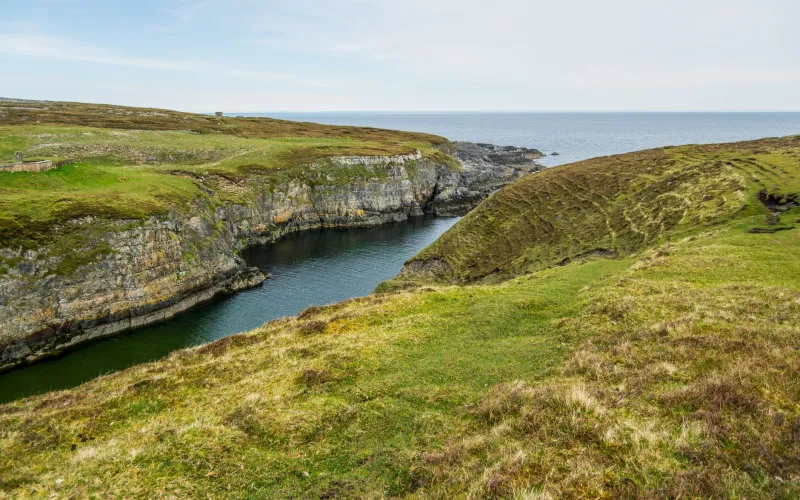
Logged In, Tuned Out: Why Remote Workers Are Quietly Moving to Dunbeath
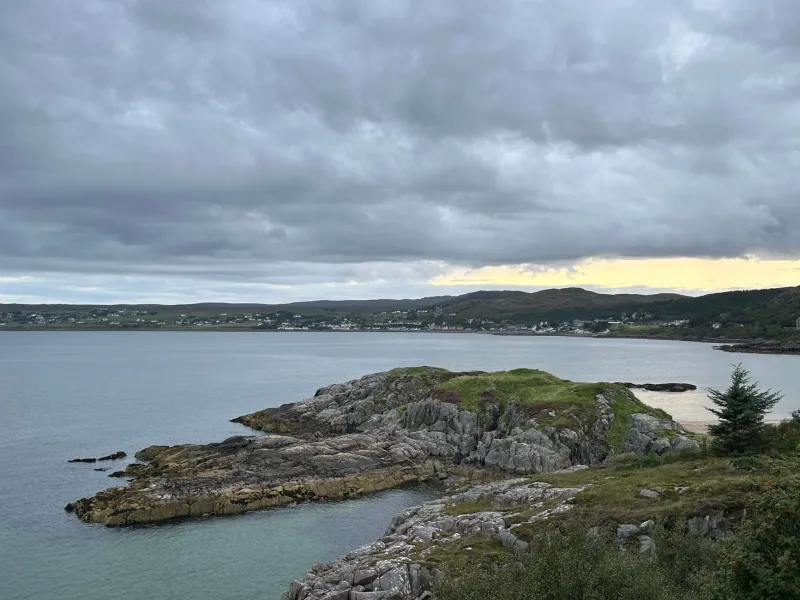
There's a moment that several people describe almost identically. You're sitting at a window, the North Sea filling the frame from sill to sky, your video call has just ended, and you realise you haven't once glanced at your phone for something other than work. Not a scroll. Not a notification. Just the call, the work, and then the sea again. For a growing number of remote workers — developers, copywriters, designers, consultants — that moment is happening in Dunbeath. And once it does, many of them struggle to explain why they'd ever go back.
The Broadband Question Nobody Expects to Ask
The first thing most people want to know is whether the internet actually works. It's a fair question. Remote Highland villages don't exactly carry a reputation for fibre-optic reliability. But Dunbeath has quietly benefited from Scotland's broader rural connectivity push, and the reality surprises most arrivals.
"I was fully prepared to use a mobile hotspot for the first few weeks," says Cara, a UX designer who relocated from Edinburgh eighteen months ago. "I'd budgeted for it, mentally and financially. But I was up and running on solid broadband within a couple of days. Faster than the flat I'd left in Leith, honestly."
That's not a universal experience — connectivity in rural Scotland remains patchy in places, and it's always worth checking specifics before committing to a move. But for Dunbeath, the combination of improved infrastructure and a community that's actively adapted to support remote working means the practical barriers are lower than outsiders assume.
What the Village Actually Offers
Here's the thing about co-working spaces: they're built on the idea that proximity to other workers generates energy and focus. Open-plan desks, exposed brick, a barista called Josh. And sometimes that works. But it also generates noise, interruption, and a particular kind of social performance that eats into your actual thinking time.
Dunbeath offers something structurally different. The focus isn't manufactured — it's environmental. When your commute is a ten-minute walk to the harbour, when your lunch break involves actual fresh air rather than a meal deal eaten at your desk, and when the ambient sound is wind and water rather than someone else's conference call, your brain simply operates differently.
Jamie, a freelance developer who arrived for a fortnight and stayed for a year, puts it plainly: "I've never been more productive. Not because I'm working longer hours — I'm not. But I'm working better hours. Cleaner thinking. Less decision fatigue. I finish a task and I actually finish it, instead of half-finishing it while thinking about something else."
The village's pace is a genuine competitive advantage. There's no pressure to be seen at the right places or cultivate the right connections. You just do the work.
The Paradox of Productive Isolation
It sounds counterintuitive: that removing yourself from the networks and hubs of a city makes you better at your job. But the people who've tried it in Dunbeath tend to describe the same paradox. Disconnection from the noise of urban professional life creates space for deeper connection with the actual work.
"I think I was confusing busyness with productivity for years," says Priya, who runs a small content agency remotely. "Coming here stripped that away pretty quickly. There's nothing to hide behind. You either did the work or you didn't. And funnily enough, I started doing it."
This isn't about turning Dunbeath into some kind of productivity cult. The village isn't selling optimisation. What it's offering is something quieter and arguably more valuable: an environment in which work and rest are genuinely separate, where the boundary between the two is enforced not by a calendar app but by the rhythm of the place itself.
Community Without Cliques
One concern that remote workers often raise before making a move like this is isolation — not professional isolation, but social isolation. What's the community actually like? Are incomers welcomed or merely tolerated?
The picture in Dunbeath is more nuanced and more encouraging than the question implies. This is a village with a long history of people arriving and putting down roots. It doesn't have the defensive insularity that some rural communities develop. It also has, in the heritage centre and the cultural life around Neil Gunn's legacy, a kind of intellectual infrastructure that draws curious, engaged people — exactly the type who tend to make good neighbours.
"I was worried I'd be the outsider forever," admits Cara. "But within a few months I was helping with a community event, getting genuinely good recommendations for walks, having real conversations with people whose lives look completely different from mine. That's harder to find in a city than people admit."
The Question Worth Sitting With
None of this is to say Dunbeath is for everyone. If your work requires daily in-person collaboration, or your social life depends on a particular urban ecosystem, a remote Highland village is probably not a practical swap. And the winters here are long, dark, and uncompromising — beautiful, but not for the faint-hearted.
But if you've been wondering whether the city is genuinely serving your work, or whether the noise and pace are costing you more than they're giving, Dunbeath is worth considering as more than a holiday destination. It might just be the place where you finally find out what you're actually capable of — with a decent broadband connection and the North Sea for company.