Shore to Stove: One Cook's Day of Finding, Gathering, and Making in Dunbeath
Margaret starts early. By the time most visitors to Dunbeath are pulling back their curtains, she's already down at the harbour, talking to the boats. Not metaphorically — literally talking to the crew coming in, finding out what's been landed, deciding on the spot whether the morning's catch fits what she had in mind for the evening.
Margaret has cooked for her family in Dunbeath for most of her adult life. She's not a restaurateur, though she's fed more people than most chefs. She's the kind of cook this part of Scotland has always quietly relied on: practical, unhurried, and completely clear about where her food comes from. On this particular morning in late autumn, she's agreed to spend the day showing exactly how a meal gets made here — from the first conversation at the quayside to the last spoonful at the table.
7am: The Harbour Conversation
The catch today is haddock. Good ones, fresh, still with the cold of the North Sea about them. Margaret looks them over with the unsentimental eye of someone who's been doing this for thirty years.
"You don't need anything fancy with fish this fresh," she says, wrapping two fillets in paper. "The worst thing you can do is overthink it."
She pays, exchanges a few words about the weather and the state of the swell, and heads back up the brae. The fish is sorted. Now for the rest.
9am: Into the Strath
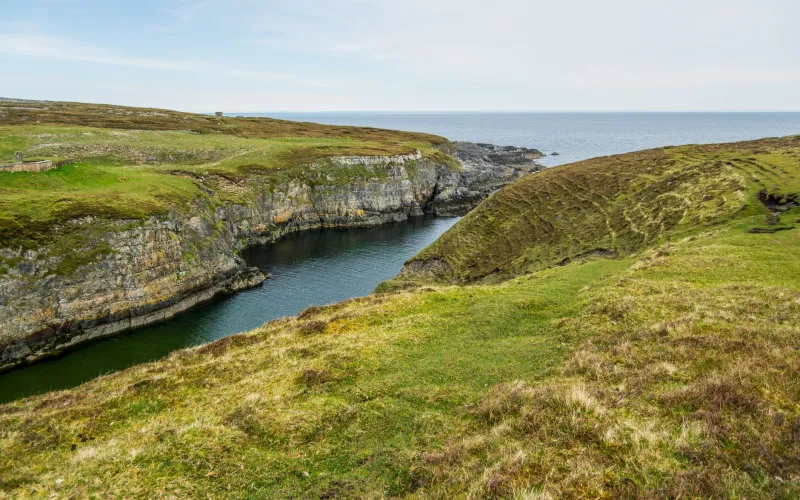
Dunbeath Strath is one of the most quietly extraordinary stretches of landscape in Caithness — a long, sheltered valley running inland from the village, threaded through by the Dunbeath Water and edged with woodland that softens the otherwise open moorland character of the county. In autumn it's a different world from the exposed clifftops: damp, mossy, smelling of leaf mould and peat.
Margaret knows exactly what she's looking for. Wood sorrel along the burn's edge — small, clover-shaped leaves with a clean, sharp flavour she uses like a seasoning. Late-season watercress where the stream runs shallow and clear. And, if she's lucky, a handful of chanterelles in the spots she keeps to herself.
She's lucky. A cluster of golden-orange mushrooms, firm and fragrant, tucked under a stand of birch. She harvests them carefully, leaving plenty behind.
"People think foraging is about taking," she says, brushing soil from a chanterelle. "It's not. It's about knowing what's there and only taking your share."
11am: A Stop at the Garden
Back in the village, Margaret calls in on her neighbour Donald, who keeps a kitchen garden of formidable productivity behind his cottage. In late autumn it's winding down — the courgettes are long gone, the tomatoes finished — but there are still leeks standing sturdy in their row, and a tangle of kale that Donald says has been better for the recent frosts.
He cuts a generous bunch of each without being asked. This is how it works in Dunbeath: an informal economy of produce and goodwill that doesn't get written down anywhere but functions with quiet reliability.
"Take the parsley too," he says, gesturing at a sprawling clump by the wall. "It'll be gone by next week."
1pm: The Thinking Part
Back in her kitchen, Margaret lays everything out on the table and looks at it. This is the part she enjoys most — the moment between gathering and cooking when the meal is still a set of possibilities.
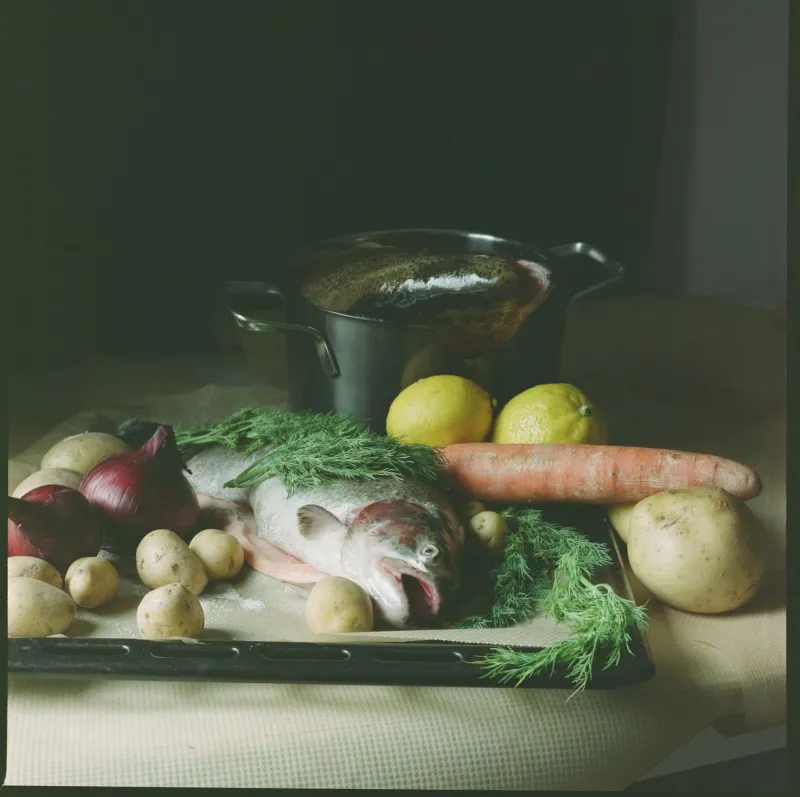
The haddock will be baked simply, she decides. A little butter, lemon zest, the wood sorrel scattered over at the end. The chanterelles will be cooked separately in a hot pan with nothing but a knob of butter and a pinch of salt, served alongside. The leeks and kale will be braised slowly with a splash of stock — she has a container of chicken stock in the fridge, made from a bird bought last week from a woman in the next village who keeps a small flock.
No recipe. No measurements. Just knowledge of the ingredients and confidence in what they need.
The Baked Haddock — How She Does It
For those who want to replicate the spirit of it at home, here's the rough shape of the dish:
Serves 2
Preheat your oven to 190°C. Lay two fresh haddock fillets skin-side down in a lightly buttered baking dish. Season with sea salt and white pepper. Add a few knobs of butter, the zest of half a lemon, and a small splash of white wine or water. Cover loosely with foil and bake for 12–15 minutes, until the fish is just opaque through. Remove the foil for the last two minutes. Scatter with fresh wood sorrel or flat-leaf parsley just before serving. That's it. The fish does the rest.
6pm: The Meal
Margaret's kitchen fills up the way kitchens in places like this always do — people arriving without much announcement, a bottle appearing on the table, conversation starting before anyone's sat down. Her daughter, a neighbour, a friend visiting from Wick. The food goes out in stages, unhurried.
The haddock is extraordinary. Not because of any technique — Margaret would roll her eyes at the word — but because it was in the sea this morning, and now it's here, and nothing happened to it in between that it didn't need.
"That's what people don't understand about cooking in a place like this," she says, refilling someone's glass. "You don't have to be clever. You just have to pay attention."
What It All Means
Food sovereignty — the idea that communities should have meaningful control over what they eat and where it comes from — can sound like an abstract political concept. In Dunbeath, it's just Tuesday. The infrastructure for it exists in the boats, the gardens, the strath, the informal networks of neighbours who grow more than they need and share without keeping score.
It's not a perfect system. There are gaps, dependencies, things that have to come from further away. But as a model for how a community can feed itself with integrity and pleasure, it's more functional than anything you'd find in a city's worth of farmers' markets.
Margaret clears the plates. Someone puts the kettle on. Outside, the North Sea is doing what it always does — running dark and indifferent under the autumn stars, completely unbothered by the warmth inside.