Aye, But What Does That Actually Mean? The Living Language of Caithness
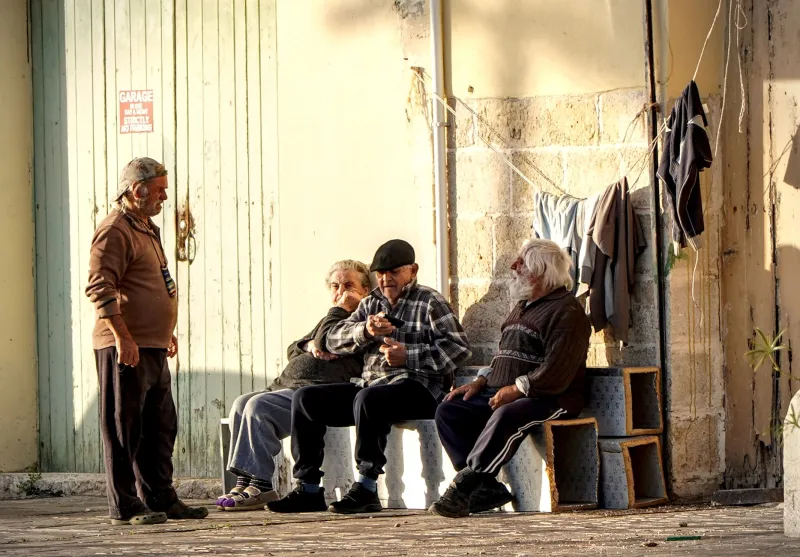
Sit in the Dunbeath harbour for long enough and you'll hear it — a cadence that doesn't quite match anywhere else in Scotland. Not the rolling lilt of the west, not the clipped vowels of Aberdeen, not the sing-song rhythm of Inverness. The Caithness dialect is its own thing entirely: flat in places, musical in others, studded with words that seem to have arrived from somewhere very far north indeed.
Which, as it turns out, they did.
A Language Assembled from Elsewhere
Caithness sits at Scotland's northeastern tip, and its linguistic history reflects the extraordinary range of peoples who have passed through, settled, traded, and occasionally invaded along this coastline. The result is a dialect that functions almost like a geological cross-section — layer upon layer of influence compressed into everyday speech.
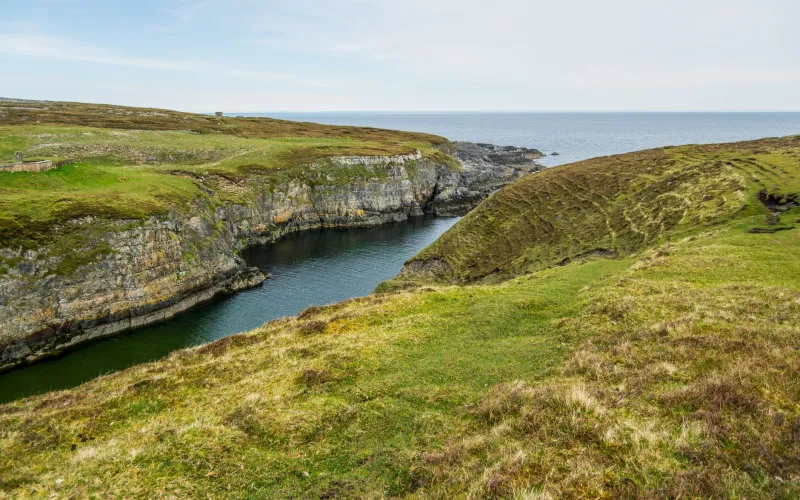
The Norse contribution is the most visible. The Vikings didn't just raid the northern Scottish coast; they colonised it, and their Old Norse tongue left deep marks on the place names and vocabulary of the region. The word geo — used across Caithness to describe a narrow coastal inlet — comes directly from the Old Norse gjá. Wick, the nearest town to Dunbeath, derives from vík, simply meaning bay. Even the name Caithness itself has Norse roots, combining Katanes — possibly meaning headland of the Cats, referring to the Pictish tribe who lived here.
In the fields and farms inland, Gaelic left its own layer. Words for landscape features, agricultural practices, and the rhythms of the farming year filtered into local speech and stuck, even as the Gaelic language itself retreated westward over the centuries. Scattered through Caithness dialect are words that Gaelic speakers would recognise immediately, worn smooth by centuries of use among communities who'd largely forgotten their origin.
Words That Don't Exist Anywhere Else
Spend time with older residents around Dunbeath and you'll accumulate a vocabulary that no dictionary quite covers.
Feerin describes the first furrow cut in a ploughed field — a word so specific to the agricultural rhythms of this landscape that it never needed to travel anywhere else. Moch means damp and misty, with a particular quality of grey Highland weather that the standard English word "drizzle" simply doesn't capture. Peerie — meaning small, possibly from Old Norse pírr — is one of the most beloved, still used affectionately for children and small creatures alike.
Then there are the verbs. To thole — to endure or put up with something — appears across Scots dialects but has particular resonance in Caithness, a county that has historically had a great deal to thole. To sotter means to simmer or bubble gently, and hearing it applied to a pot on a kitchen stove makes you understand the word immediately in a way that its definition alone never quite achieves.
"The words aren't just descriptions," says Isobel Mackay, a retired schoolteacher who grew up in a farmhouse a few miles from Dunbeath and has spent years documenting local speech. "They're attitudes. Thole isn't just about enduring — it carries a whole philosophy of quiet resilience. You can hear the landscape in it."
The Isolation That Preserved It
Languages change fastest where people mix most. Caithness's relative isolation — the county sits at the end of a long road from anywhere, sandwiched between the sea and the flow country — meant that the dialect was buffered from the linguistic homogenisation that swept through much of Britain during the twentieth century.
The arrival of television, and later the internet, inevitably accelerated change. But something about the strength of local identity in communities like Dunbeath has acted as a counterweight. People here are proud of how they speak. The dialect isn't embarrassing; it's a marker.
"When I was young, you'd sometimes hear folk trying to soften their accent when they were talking to people from the south," says Donald Gunn, a fisherman in his sixties who was born and raised on this stretch of coastline. "Now I think it's the opposite. The young ones are leaning into it. They know it's something different."
Younger Voices, Older Words
The generational picture is more complicated than a simple story of decline or revival. Younger people in and around Dunbeath navigate between registers with the fluency that characterises most regional dialect speakers in contemporary Britain — broad dialect at home and among friends, something closer to standard Scottish English in formal contexts.
What's striking is how selectively the old vocabulary is being retained. Words that describe the specific physical world of Caithness — the landscape, the weather, the sea — seem to hold on with particular tenacity. Words tied to agricultural practices that have disappeared are fading with those practices. The language is adapting, as it always has.
Sarah Sutherland, who is in her mid-twenties and grew up in a village near Dunbeath before returning after university, describes code-switching as entirely natural. "I'd never say feerin in a work meeting. But I'd say peerie to my wee cousin without thinking twice. Some words just feel like they belong to certain situations — and certain places."
She pauses, then adds: "When I'm back here, near the sea, the old words come back more easily. I think the landscape calls them out of you."
What It Tells Visitors About Dunbeath
For anyone coming to Dunbeath from elsewhere in the UK, the dialect is worth attending to — not as a curiosity, but as a kind of orientation. The words people use here encode the things they've found important enough to name precisely: specific weathers, specific geographies, specific qualities of endurance and community.
If you want to understand what Dunbeath values, listen to how it speaks. Notice the exactness of the weather words — the distinctions drawn between types of mist, types of wind, types of rain that standard English blurs together into a single grey category. Notice the warmth in the diminutives, the dry understatement in the verbs, the way the Norse place names on the map echo through the conversation of people who've never studied etymology in their lives.
The language that lives here isn't a relic. It's a living record of everything this corner of Scotland has been — and a quietly confident statement about what it intends to remain.