Reset by the North Sea: What Dunbeath Does to a Burned-Out Brain
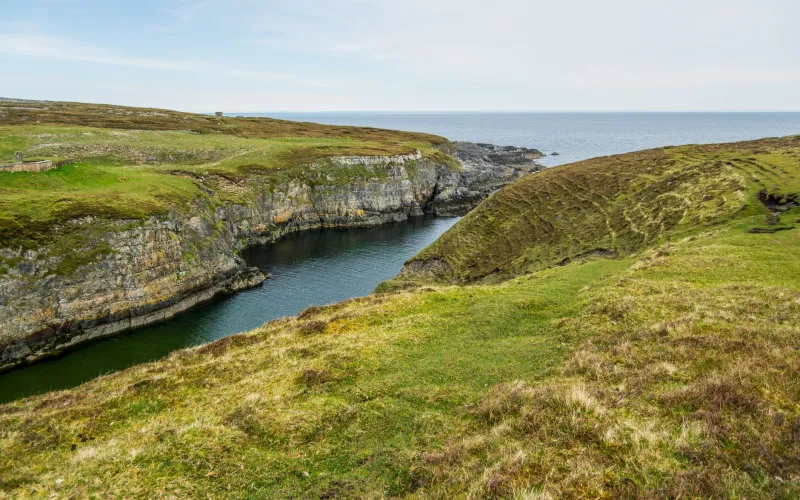
Martha Gillies had been a graphic designer in Manchester for eleven years when she booked a last-minute self-catering cottage near Dunbeath on a whim. She'd expected a week of walking and bad weather. What she didn't expect was to still be here eighteen months later, running a small illustration studio from a converted outbuilding above the strath.
"I genuinely thought I was just tired," she says, nursing a mug of tea at her kitchen table while a gannet drifts past the window. "But the longer I stayed, the more I realised I hadn't been tired — I'd been completely depleted. There's a difference. And Dunbeath found it."
Hers isn't an isolated story. Over the past few years, a loosely connected pattern has emerged around this small Caithness village: people arrive frayed, and they leave — or in some cases, don't leave — noticeably restored. It's not the kind of thing that appears in wellness brochures. Nobody's selling it. But those who've experienced it tend to speak about it with a particular conviction.
What the Research Is Starting to Say
The mental health benefits of coastal and rural environments have been the subject of growing academic interest across the UK. The concept of "blue space" — proximity to water — has been linked in multiple studies to reduced cortisol levels, improved mood, and lower rates of anxiety. "Green space" research adds forests, moorland, and open countryside to the picture. Dunbeath, sitting at the intersection of cliff, shore, river, and moorland, arguably offers all of it at once.
Dr. Fiona Mackay, a Glasgow-based psychologist who has researched place-based wellbeing in Scottish communities, puts it plainly: "When you remove the constant low-level stimulation of urban environments — the notifications, the ambient noise, the social performance of city life — the nervous system has an opportunity to recalibrate. Somewhere like Dunbeath does that very efficiently, because the contrast is so extreme."
What makes Dunbeath specific, she suggests, isn't just the landscape but its particular combination of factors: genuine remoteness, a small and unhurried community, and a physical environment that demands sensory attention. "You can't be on autopilot here. The sea changes. The light changes. The path changes. Your brain is occupied, but gently — which is exactly the opposite of what screens do to us."
The Village That Doesn't Perform for You
One of the things visitors consistently remark on is how unselfconscious Dunbeath feels. There are no artisan coffee queues, no curated heritage trails with QR codes, no sense that the place is trying to be anything other than what it is. The harbour sits at the foot of the cliffs doing harbour things. The strath winds inland doing strath things. The community gets on with itself.
For people conditioned by cities — where even leisure has become a kind of productivity — this absence of performance can be quietly disorienting at first, and then deeply liberating.
Jamie Sutherland, who grew up in Dunbeath and now runs a small boat from the harbour, has watched this dynamic play out with visiting guests for years. "You can always tell when someone's starting to settle in," he says. "First couple of days, they're still checking their phones, still looking for the thing to do next. Then something changes. They start just... sitting. Watching the water. And their whole face is different."
He pauses. "I don't know what you'd call it scientifically. But I know what it looks like."
Creativity as a Symptom of Recovery
Something else keeps coming up in these conversations: creativity. Writers, painters, musicians, and designers who visit Dunbeath frequently report a sudden loosening — ideas arriving without effort, old projects unblocking, new directions appearing from nowhere.
Martha Gillies puts it down to what she calls "the removal of visual competition." In a city, she argues, the visual field is saturated — advertising, architecture, other people's aesthetic choices. "Your eye is constantly being told what to notice. Here, you have to decide for yourself. And that act of deciding — of genuinely looking at something because you chose to — seems to wake something up."
This tracks with what psychologists describe as "restorative attention" — the kind of effortless, self-directed noticing that natural environments uniquely support. It's the cognitive opposite of directed attention, the sort demanded by deadlines and inboxes, and it's the kind most depleted in chronically stressed people.
What Dunbeath Has That Other Retreats Don't
Scotland is not short of beautiful, remote places. So why does Dunbeath seem to generate these responses with particular frequency? Those who've tried to articulate it tend to land on a few consistent points.
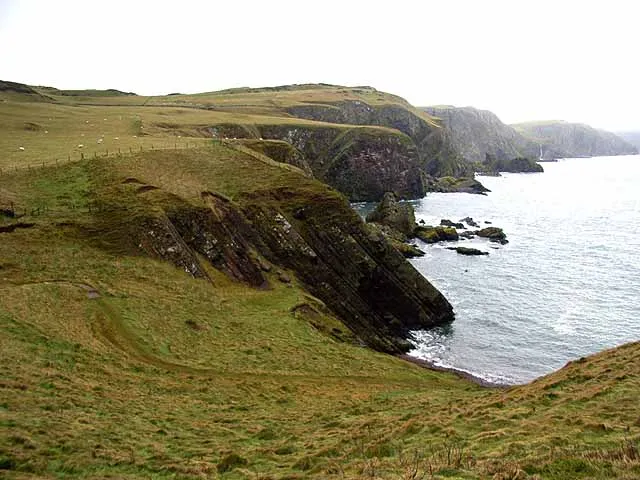
The scale feels right. The village is small enough to comprehend — you can walk its full geography in an afternoon — which gives a sense of mastery and orientation that larger places don't. The community is present but not intrusive; people acknowledge each other without demanding anything. And the landscape is genuinely dramatic without being intimidating: the cliffs are extraordinary, the strath is intimate, the sea is always visible but rarely threatening from land.
There's also, several people suggest, something about the quality of the silence. Not the absence of sound — the wind here is rarely absent — but the absence of human noise. The difference, as one visiting writer put it, "between a quiet room and a quiet world."
Staying or Leaving — Both Work
Not everyone who finds something in Dunbeath ends up staying, of course. Most visitors return to their lives, their cities, their jobs. But many describe the experience as providing something they carry back with them — a recalibration, a new baseline, a memory the nervous system can return to.
"I think of it as a reference point now," says a London-based architect who visits each autumn. "When things get bad, I think about sitting on that cliff path. And something in me remembers what it felt like to be completely fine."
For Martha Gillies, the illustration studio above the strath is now producing some of the best work of her career. She's not evangelical about it — she's not trying to convince anyone to follow her north. But she does say this:
"I used to think I needed the city to be creative. Turns out I just needed to not be exhausted."