Fin, Fluke and a Great Deal of Waiting: Watching Whales and Dolphins from Dunbeath's Shore
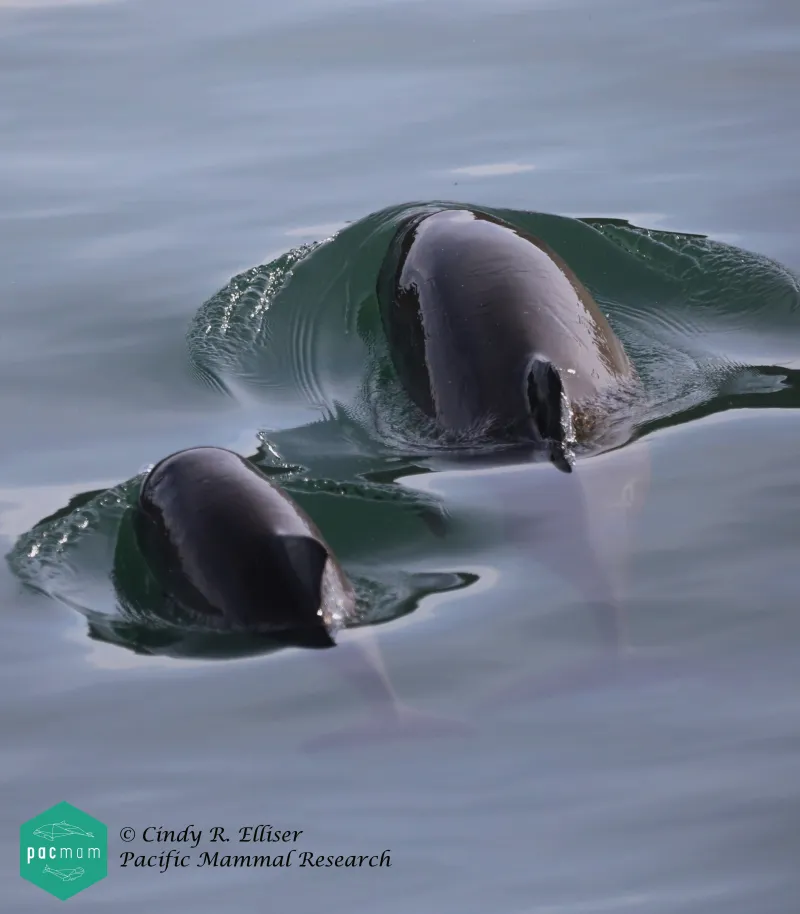
Photo: harbour porpoise fin breaking surface calm North Sea Scotland coast, via news.wwu.edu
Nobody promises you a whale. That's the first thing to understand about shore-based marine mammal watching, and the second thing is that a blank day is normal and not a failure. The sea doesn't owe you a spectacle. But if you put in the hours, on the right days, in the right spots, Dunbeath's coastline quietly delivers — and the moment a dark fin breaks the surface a few hundred metres out is genuinely electrifying.
The short answer: porpoises
Harbour porpoise are the most numerous cetaceans in these waters and the most likely sighting from Dunbeath by a wide margin. They're small — a metre and a half at most — with a low, triangular dorsal fin and no beak. What you'll usually get is a brief, rolling arc of back and fin, a puff of breath in still air, then nothing for thirty seconds. They don't leap. They don't perform. They travel in ones and twos and twos and threes, following fish, and if you blink you'll miss them.
The rest of the cast
Beyond porpoise, the east Caithness coast offers a decent supporting list. Bottlenose dolphins turn up, often in larger, noisier groups, and they're noticeably chunkier with a proper beak and a tall, curved fin. White-beaked dolphins are possible, particularly in summer. Risso's dolphins are darker, heavily scarred, and usually seen in small, unhurried parties.
Minke whales are the realistic big animal from May through to September — seven or eight metres, pointed snout, small fin set well back, usually no blow visible on a calm day. Humpbacks have become more frequent around northern Scotland in recent years and are always a possibility in the colder months; look for a tall, bushy, unmistakable blow and the occasional spectacular breach. Orcas are the lottery ticket, mostly seen in these waters between spring and midsummer, and you will almost certainly hear about a sighting through local networks rather than stumble upon one.
Basking sharks aren't mammals but deserve a mention: enormous, slow, and occasionally visible in summer with both dorsal and tail fins breaking the surface at once.
Conditions do most of the work
Get the weather right and your chances multiply. A flat or nearly flat sea is everything — surf and whitecaps hide fins completely. Wind direction matters too: a light offshore breeze flattens the surface close in, while an onshore blow sends chop into the very place you're trying to watch.
Grey, bright-overcast days with a sheen on the water are ideal for spotting blows. Hard summer sun creates glare and diamonds that make the sea unreadable. Early morning is generally best, before the wind gets up; evening can be excellent too.
And there's the birds. A sudden, tight, frantic flock of gannets and gulls is a tell worth following with your eyes — where the fish are, the porpoises and dolphins often follow.
Where to stand
Height beats distance. A raised vantage point lets you look down on the water instead of along it, which halves the glare and doubles the area you can scan. The harbour wall is a good starting point and the safest option in a swell, but headlands and higher ground further along the coast give you a much wider field of view.
Pick a spot, settle, and scan slowly left to right in bands — near water, middle distance, horizon. Then start again. Hurried scanning misses things. Fifteen deliberate minutes of slow sweeping will beat an hour of restless darting about.
Kit that earns its place
Binoculars of 8x42 or similar are perfect; higher magnification sounds appealing but narrows your field of view and makes it harder to find a moving animal. Polarised sunglasses cut surface glare and are arguably the single most useful item after the binoculars themselves. Take layers, a flask and something to sit on. Add a notebook — you'll be amazed how hard it is to remember what you saw, when and where, and records are genuinely valuable.
Doing it properly
Watch from land wherever you can. If you're in a boat, follow the Scottish Marine Wildlife Watching Code: don't pursue animals, don't cut across their path, don't chum the water, and let them decide whether to approach. Keep drones away — the noise disturbs them and it's simply not worth it. Leave pups and seals alone.
Report what you see. Shorewatch, run by Whale and Dolphin Conservation, trains volunteers to record sightings from fixed coastal points, and regional groups log verified records. Even a porpoise counts. Citizen records are how scientists build a picture of where these animals actually are off a coast that is far less studied than the west.
The patience maths
One four-hour session is worse than four one-hour sessions on different days and tides. Persistence beats duration. And bring someone to talk to, because the long empty stretches are the bulk of the experience.
Then, eventually — in flat light, on a still morning, when you've almost stopped expecting it — a fin. Small, dark, deliberate. Gone again. You'll stand there grinning like an idiot on an empty headland, and you'll understand exactly why people keep coming back.