Something You've Never Visited Can Still Feel Like Home: The Dunbeath Effect
There's a word in Welsh — hiraeth — that describes a longing for a home you can't return to, or perhaps never had. It's one of those untranslatable concepts that English speakers tend to borrow with a kind of reverent envy. But spend a few days in Dunbeath and you might find yourself reaching for it instinctively, because something about this small Caithness village does something rather peculiar to people who visit for the first time.
They feel, against all logic, that they've been here before.
Arriving at the Edge of Something
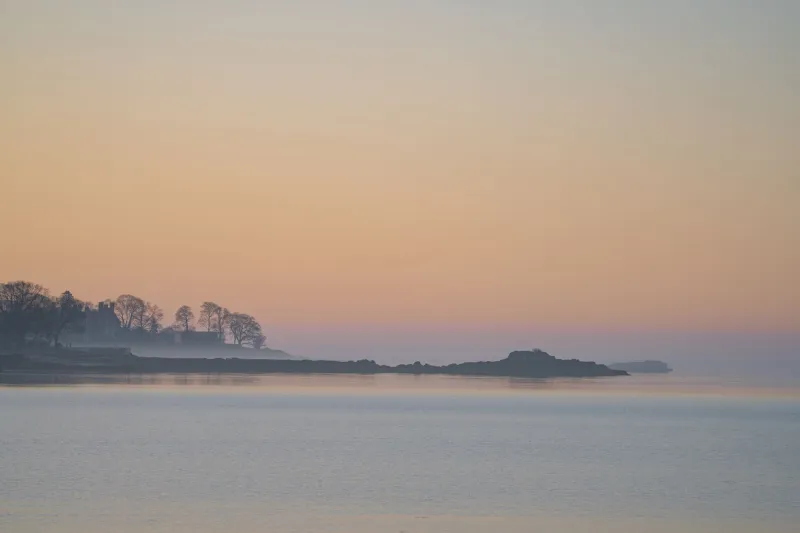
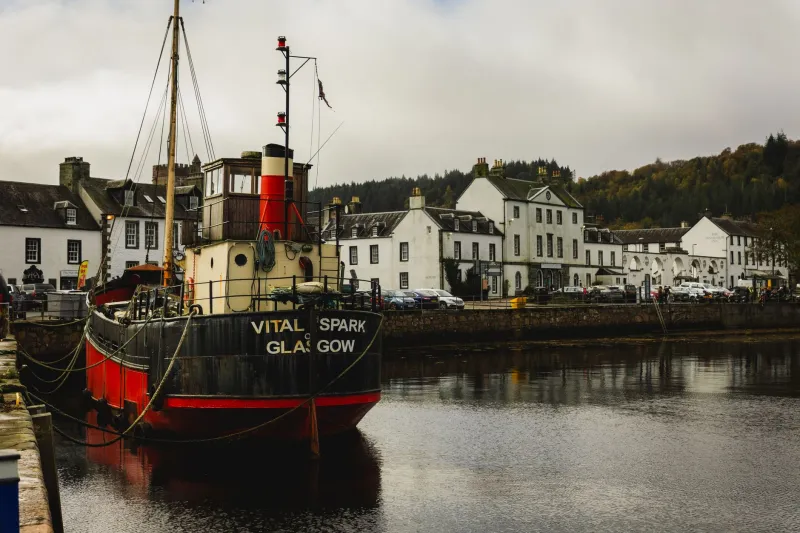
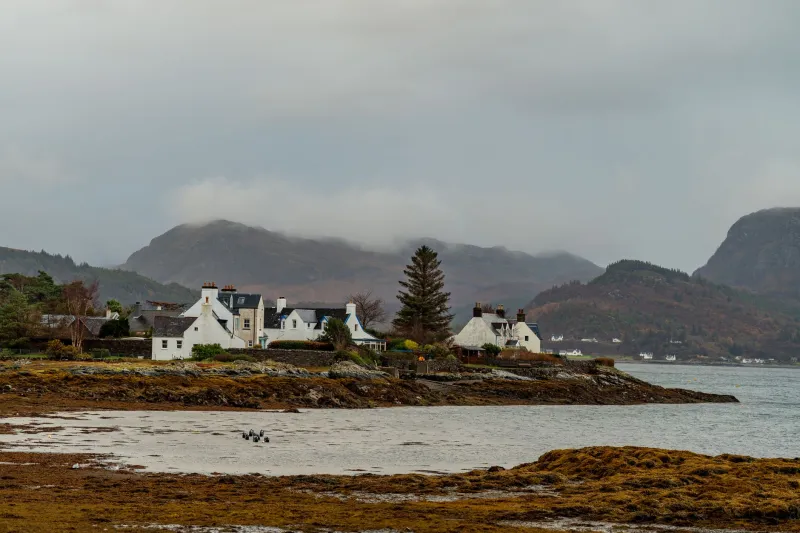
The approach to Dunbeath along the A9 doesn't exactly prepare you for an emotional reckoning. You've been driving through open moorland, past wind-scoured hillsides and the occasional glimpse of grey sea, and then the road dips and there it is — a harbour, a cluster of cottages, a river threading quietly down to the firth. It's modest. It's unremarkable by almost any conventional measure of what makes a place worth stopping for.
And yet people stop. And then they stay longer than planned. And then, when they finally leave, they feel something they struggle to name.
Sarah, a teacher from Nottingham who visited with her partner last autumn, described it like this: "I kept thinking I recognised the smell of the place. The salt and the grass and something almost peaty underneath it all. I grew up in the East Midlands — I have absolutely no Highland heritage that I know of. But I felt like I was remembering something."
She's not alone. Spend any time in conversations with visitors to Dunbeath and variations of this experience emerge with striking regularity.
The Psychology of Elemental Familiarity
There are rational explanations worth considering. Human beings are, at some deep neurological level, wired to respond to certain landscapes — coastlines in particular. The meeting of land and sea represents both boundary and possibility, a threshold that the brain processes differently from inland environments. Evolutionary psychologists sometimes argue that coastal settings trigger ancient associations with abundance: food, fresh water, shelter, trade routes. Whether or not you subscribe to that framework, there's something undeniably primal about standing where the Dunbeath Water meets the sea.
Beyond the coastline itself, Dunbeath operates at a sensory pace that modern life rarely allows. The sounds here — which we'll return to in another piece — are layered and unhurried. The light changes constantly but never aggressively. There's no background roar of traffic, no ambient commercial noise. The village doesn't compete for your attention; it simply exists, and in that quietness, something in the visitor begins to settle.
When the noise of ordinary life drops away, some people find that what's left feels surprisingly familiar. Not because Dunbeath resembles anywhere they've been, but because the absence of distraction allows them to reconnect with something internal — a quieter version of themselves they'd forgotten existed.
Neil Gunn's Enduring Invitation
It would be impossible to discuss Dunbeath's hold on the imagination without acknowledging Neil Gunn, the novelist who grew up here and spent much of his literary life trying to articulate exactly this quality. His masterwork, Highland River, follows a young boy's journey upstream along the Dunbeath Water — but it's really a meditation on memory, belonging, and the landscapes that shape identity at a cellular level.
Gunn understood that a place doesn't have to be yours by birth to claim you. His writing reaches readers who have never been within two hundred miles of Caithness and makes them feel, with genuine force, that they've lost something they didn't know they had. That's not mere literary skill — it's testimony to something real about the village itself, something Gunn was channelling rather than inventing.
Visitors who arrive having read Gunn often report the most intense versions of this homecoming sensation. But even those who come without any literary context seem to brush up against it. The village, in some sense, does what Gunn's books do: it bypasses the rational mind and speaks directly to something older.
The Architecture of Intimacy
There's also something worth noting about Dunbeath's physical scale. This is not a place designed to impress. The harbour walls are functional, the cottages proportioned for life rather than aesthetics, the streets laid out according to practical necessity. Nothing here is performing for you.
That absence of performance creates an unusual intimacy. You're not being shown a place — you're simply in one. And because the village isn't trying to be anything other than what it is, there's a kind of honesty to it that visitors find deeply restful. We spend so much of our lives in environments that have been designed to manipulate our responses — retail spaces, hospitality venues, social media feeds — that an unmanipulated place registers as almost shocking in its authenticity.
Mark, a landscape architect from Edinburgh who visits Dunbeath every year now, put it plainly: "Most places I go, I'm aware I'm a tourist. Here I just feel like a person. I don't know why. But I come back because I want more of that feeling."
Belonging Without History
Perhaps what Dunbeath offers is a rare permission: to belong somewhere without having earned it through generations of ancestry or years of familiarity. The village doesn't ask for your credentials. It receives you as it receives the tide — without judgement, without ceremony, without particular interest in who you were before you arrived.
For many visitors, that unconditional quality is precisely what triggers the homecoming sensation. Home, after all, is less about geography than about feeling. It's about being somewhere that doesn't require you to explain yourself, somewhere the pressure of identity loosens its grip for a while.
Dunbeath, quietly and without any apparent effort, provides exactly that. Whether it's the landscape, the light, the literary echoes, or something genuinely ineffable about the place, the effect is consistent enough to deserve its own name.
Call it the Dunbeath Effect. You'll understand it the moment you arrive.