Beneath a Billion Stars: Your Complete Guide to Stargazing from Dunbeath's Dark Shores
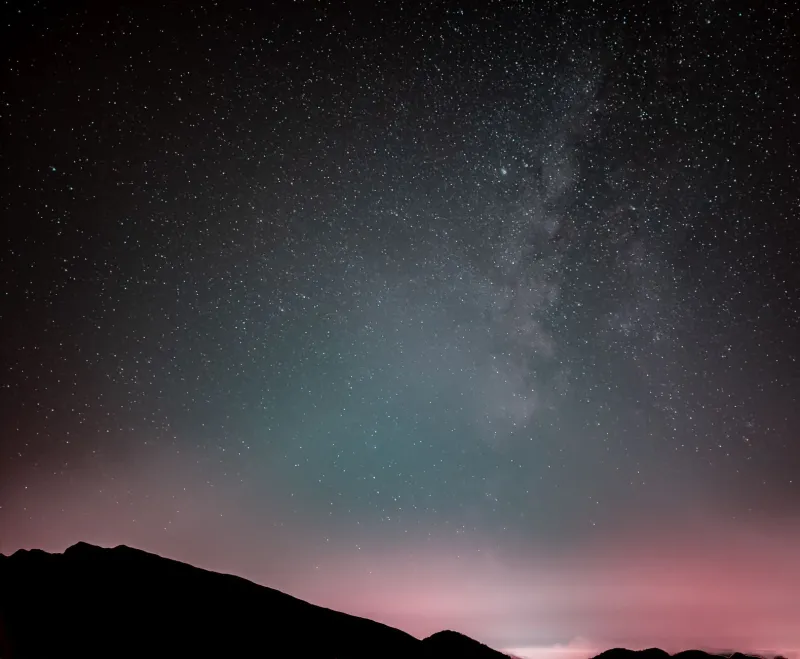
Most of us have forgotten what the night sky actually looks like. Not the version visible from a suburban back garden through a gap in the light pollution, but the real thing — the Milky Way in full flood, the planets burning steady while the stars twinkle around them, the occasional meteor scratching a bright line across the dark. To see that sky, you need to go somewhere the electric light hasn't reached. Dunbeath is one of those places.
This stretch of the Caithness coast sits well outside the light-pollution halos that surround Scotland's cities, towns, and even most of its larger villages. On a clear night — and they do come, particularly in autumn and winter — the darkness here is the kind that takes your eyes a full twenty minutes to properly adjust to. What you see when they do is worth every mile of the journey north.
Understanding the Dark-Sky Conditions Around Dunbeath
Light pollution is measured using the Bortle scale, which runs from one (the darkest skies on Earth, found in remote deserts and mountain ranges) to nine (the washed-out orange glow of an inner city). Most of rural Caithness sits comfortably in the two-to-three range — dark enough to see thousands of stars with the naked eye, dark enough for the Milky Way to be not just visible but genuinely dramatic.
The geography helps. Dunbeath faces the North Sea to the east, meaning there is no artificial glow on the horizon in the direction the sky rotates toward through the night. The village itself is small enough that its handful of street lights cause no meaningful interference once you've walked a short distance from the main road. And the Caithness landscape — flat, open, largely treeless — offers unobstructed sightlines in almost every direction.
Weather is the variable you cannot control. The north of Scotland has a reputation for cloud cover that is, frankly, deserved. But this is also why the clear nights, when they arrive, feel like gifts. Check the Met Office forecast and the Clear Outside app (which gives hour-by-hour cloud predictions specifically for stargazers) before committing to a late evening out.
When to Come for the Best Views
Autumn (September–November) is the sweet spot for most stargazers. The nights grow long quickly, temperatures are cold but manageable, and the summer haar — the coastal sea mist that can roll in without warning — becomes less frequent. The Andromeda Galaxy is well-positioned for viewing, and Perseus climbs high enough in the sky to give you a reasonable chance at the Perseid meteor shower's stragglers.
Winter (December–February) offers the longest nights and some of the most dramatic constellations — Orion dominates the southern sky, and on exceptional nights the aurora borealis is visible from this latitude. Caithness sits far enough north that Northern Lights sightings, while not guaranteed, are not uncommon during periods of high solar activity. The cold is significant; dress for it accordingly.
Spring (March–May) brings lighter nights but also some of the clearest, driest air of the year. Leo and Virgo rise in the east, and the Milky Way begins to make its seasonal return.
Summer is the least ideal season for deep-sky viewing — at this latitude, true astronomical darkness barely arrives before midnight in June and July — but the extended dusk and dawn produce extraordinary colours over the sea, and noctilucent clouds (those ghostly electric-blue formations visible at high latitudes after sunset) are a phenomenon worth staying up for.
The Best Viewing Spots
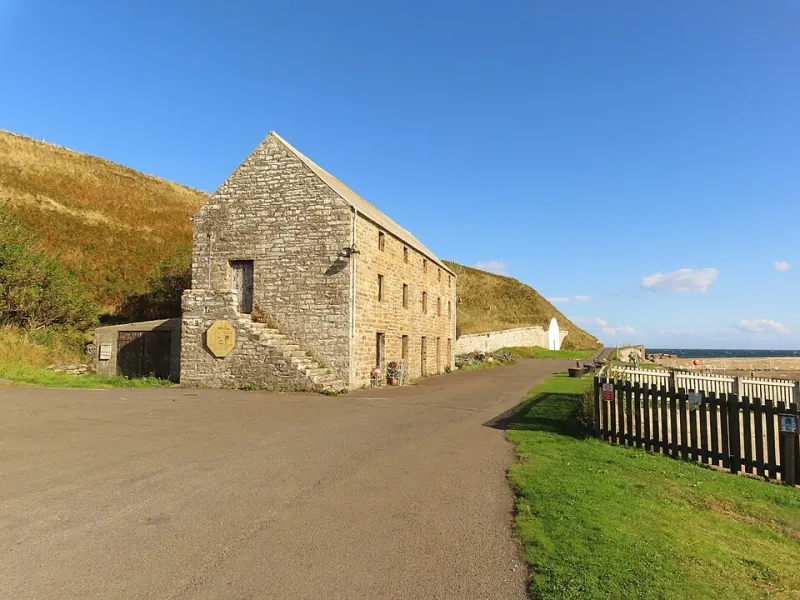
The Harbour. For a first night out, the harbour area is a sensible starting point. Walk past the harbour wall to the small beach area and face east across the water. The horizon is clean, the ground is flat, and you're sheltered enough from any northerly wind to stand comfortably. This is where the planets reveal themselves most dramatically — Jupiter and Saturn, when visible, appear to rise directly from the sea.
The Strath Road. Drive or walk inland along the Dunbeath Water and pull over once the village lights are entirely behind you. The strath valley creates a natural corridor of dark sky overhead, and the combination of the river sound and the stars above is — there is no other word for it — extraordinary. This is also one of the better spots for watching satellites pass overhead; the International Space Station, when it transits, is bright enough to be startling.
The High Ground Above the Broch. The Iron Age broch sits on elevated ground above the village, and the open hillside above it offers a 360-degree horizon that serious stargazers will appreciate. The walk up in the dark requires a head torch and sensible footwear, but the reward is a vantage point that feels genuinely otherworldly — ancient stone beneath you, the cosmos above, and the sound of the sea somewhere in the darkness below.
What to Look For
The Milky Way is visible to the naked eye from late summer through winter, arching across the sky from south to north. It appears as a broad, faintly luminous band — not a single stripe but a complex, textured river of light that rewards patient observation.
Orion is the great winter constellation, recognisable by the three stars of his belt. From Dunbeath, he rises in the south-east and climbs high enough to reveal the Orion Nebula (the fuzzy 'star' in his sword) with binoculars.
The Pleiades (the Seven Sisters) are visible to the naked eye from autumn onward — a tight cluster of blue-white stars in Taurus that appear almost three-dimensional on a truly clear night.
The Aurora Borealis is the headline act for lucky visitors. Sign up for Space Weather alerts or use the My Aurora Forecast app, and keep one eye on the northern horizon during periods of elevated solar activity. The displays over the Caithness coast range from a faint green shimmer to full curtains of green, pink, and violet that render description inadequate.
Nocturnal Wildlife: A Bonus You Didn't Plan For
Stargazing in Dunbeath is rarely a purely astronomical experience. The same darkness that reveals the sky also brings out the village's nocturnal wildlife, and the two encounters have a way of combining into something unexpectedly moving.
Barn owls quarter the fields along the strath with an eerie, soundless efficiency — their white undersides catching whatever light there is. Otters are active through the night along the Dunbeath Water, and if you stand quietly near the river, you may hear rather than see them: the splash of a dive, the crunch of a crab being eaten on a rock. Bats emerge at dusk and remain active until late, hunting moths along the hedgerows.
Bring a red-light head torch rather than a white one — red light preserves your night vision and is less disruptive to the animals around you.
Practical Preparation
- Dress for the cold. Even in September, temperatures can drop sharply after midnight. More layers than you think you need is the correct approach.
- Bring a reclining camp chair or a mat. Looking straight up for extended periods is much more comfortable horizontal.
- Download Stellarium or SkySafari before you leave home — both are excellent free apps for identifying what you're looking at.
- Allow twenty minutes for your eyes to adjust before deciding the sky is disappointing. The difference between five minutes of dark adaptation and twenty is genuinely dramatic.
- Tell someone where you're going. The Caithness countryside is safe, but the terrain can be uneven, and mobile signal is intermittent in the strath.
The Meditative Dimension
There is something about standing beneath a genuinely dark sky that recalibrates perspective in a way that is difficult to explain and easy to feel. The scale of it — the sheer, vertiginous depth of the universe visible above a Highland village on a cold autumn night — has a way of making the contents of your inbox seem appropriately small.
Dunbeath offers this without fanfare, without an entry fee, and without a visitor centre explaining what you ought to feel. The sky is simply there, as it has been above this stretch of coast for longer than the broch on the hill, longer than the village itself, longer than human memory reaches.
Look up long enough and you start to understand why the people who have always lived here carry a particular kind of patience. When your ceiling is the Milky Way, urgency tends to feel a little beside the point.