No Rush Required: How Dunbeath Quietly Dismantles Your Sense of Urgency
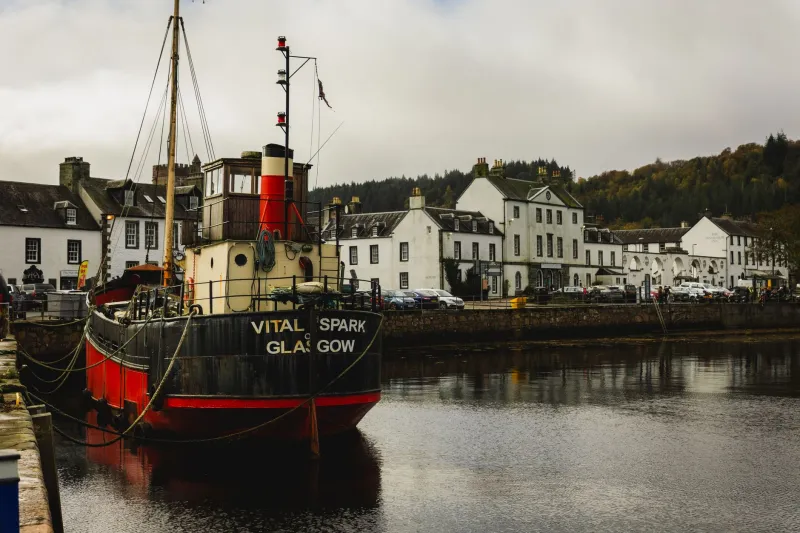
There are no traffic lights in Dunbeath. This is not a complaint. It is, if anything, the whole point.
Arrive from Edinburgh or Manchester or London — anywhere governed by the tyranny of green and amber and red — and the absence hits you before you've even properly parked the car. Nobody is signalling at you. Nobody needs you to move faster. The village simply exists, at its own pace, in its own time, and it invites you to do the same.
This is what locals have started calling, with quiet amusement, the Dunbeath Effect.
What Happens to Your Brain When the Noise Stops
Neuroscientists have been paying increasing attention to what happens when humans are removed from high-stimulation environments. Research from the University of Exeter, among others, has demonstrated that exposure to natural, low-density landscapes — particularly coastal and rural settings — measurably reduces cortisol levels and restores what psychologists call 'directed attention.' In plain English: your brain stops firefighting and starts actually thinking again.
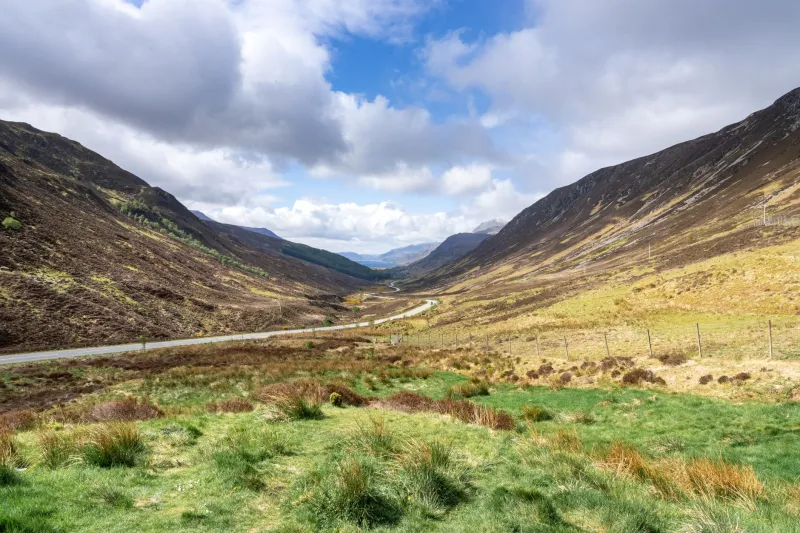
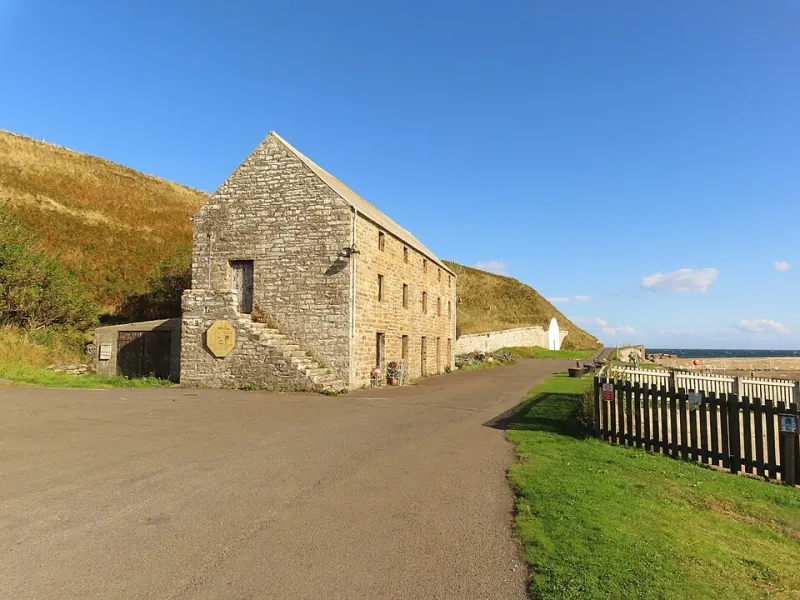
Dunbeath is, almost by accident, a perfect laboratory for this effect. The village sits in a fold of Caithness coastline where the Dunbeath Water meets the North Sea, shielded from the kind of commercial development that tends to follow tourist footfall. There is no gift shop strip. There is no branded coffee chain. What there is, instead, is a harbour, a strath, a broch on the hill, and a quality of silence that takes a day or two to stop feeling strange.
'People arrive here looking slightly hunted,' says one long-term resident who has lived in the village for over thirty years. 'By the second morning, they've stopped checking their phones every five minutes. By the third, they're just... sitting. Watching the water. That's when you know it's worked.'
Time Moves Differently Here — and That's Not Just a Feeling
The psychologist William James wrote in the nineteenth century that time feels long when we are bored and short when we are absorbed. But there is a third state — one that Dunbeath seems to reliably produce — in which time simply becomes irrelevant. You stop measuring it.
Part of this is structural. Without the visual cues of urban life — the digital clocks on every shop front, the countdown timers at pedestrian crossings, the push notifications that segment your day into anxious little parcels — your internal sense of rhythm begins to recalibrate. You eat when you're hungry rather than when your calendar tells you it's lunchtime. You sleep when it's dark. You walk when the light looks interesting.
The Highland landscape encourages this recalibration in its own unhurried way. The Dunbeath Strath stretches inland through ancient farmland and woodland, and a walk along its banks rarely conforms to any schedule. You stop to watch an otter. You sit on a stone to let the midges pass. You arrive back at the village later than intended and discover, with mild surprise, that this is absolutely fine.
Lessons from the People Who Live Here Year-Round
For residents, this relationship with pace is less a novelty than a quiet philosophy. Several locals describe a conscious decision to resist the acceleration that has characterised life elsewhere in Britain over the past two decades.
'I moved here from Glasgow fifteen years ago,' one woman explains, 'and I thought I'd miss the pace. I didn't. What I missed, when I went back to visit, was this — the ability to think a whole thought without being interrupted.'
Another resident, who fishes the harbour and tends a smallholding, puts it more directly. 'We're not slow here. We're deliberate. There's a difference. Everything gets done. It just gets done properly.'
This distinction — between slowness as passivity and deliberateness as intention — is worth carrying with you when you visit.
How to Actually Experience the Dunbeath Effect
It doesn't happen automatically. If you arrive in Dunbeath still tethered to your usual rhythm, you can spend three days here and leave having felt very little shift at all. The reset requires a degree of cooperation.
A few things that seem to help:
Leave a morning unplanned. Resist the urge to schedule every hour. Walk toward the harbour with no particular destination in mind and see where the tide and the light take you.
Put the phone in the glove box. Not off — just away. The difference between having it in your pocket and not having it is larger than you'd expect.
Eat at the pace the village sets. If the local café is quiet, don't hurry through your tea. The point is not the tea. The point is the sitting.
Walk the strath at dusk. The light along the Dunbeath Water in the evening hours has a quality that is genuinely difficult to describe. It slows you down on its own terms.
Taking It Home
The honest truth about the Dunbeath Effect is that it fades. Return to the motorway, the office, the inbox, and the cortisol creeps back within days. But visitors consistently report that the memory of the shift — the physical recall of what it felt like to exist without urgency — becomes a reference point they return to.
Some build in deliberate 'Dunbeath mornings' at home: an hour before the phone comes on, a walk with no destination, a breakfast eaten slowly. These are small things. But they are rooted in something the village demonstrates with quiet conviction: that time, when you stop fighting it, tends to give you more of itself.
There are no traffic lights in Dunbeath. This is not a complaint. It is, in the end, an invitation.