Something in the Air: Why Dunbeath Is Quietly Becoming Scotland's Most Talked-About Wellness Retreat
Nobody planned it this way. There's no spa. No retreat centre with a waiting list and a hemp-milk latte menu. Dunbeath doesn't market itself as a place of healing — it doesn't really market itself at all, if we're honest. And yet, if you spend any time reading reviews, talking to return visitors, or simply chatting to the woman behind the counter at the local shop, a pattern starts to emerge. People come here tired, tightly wound, or quietly struggling. They leave feeling, as one regular visitor put it, "like someone had ironed out the creases."
So what's actually going on?
The Numbers Behind the Feeling
Researchers have been circling this kind of question for years. The concept of restorative environments — places that genuinely help the brain recover from cognitive fatigue — has been well-documented since the 1980s, when American psychologists Rachel and Stephen Kaplan developed Attention Restoration Theory. Their argument, broadly, is that natural environments demand a softer, more effortless kind of attention than our usual daily grind. Instead of the sharp, directed focus required by a spreadsheet or a busy commute, nature invites what they called "fascination" — gentle, undirected engagement that lets the brain breathe.
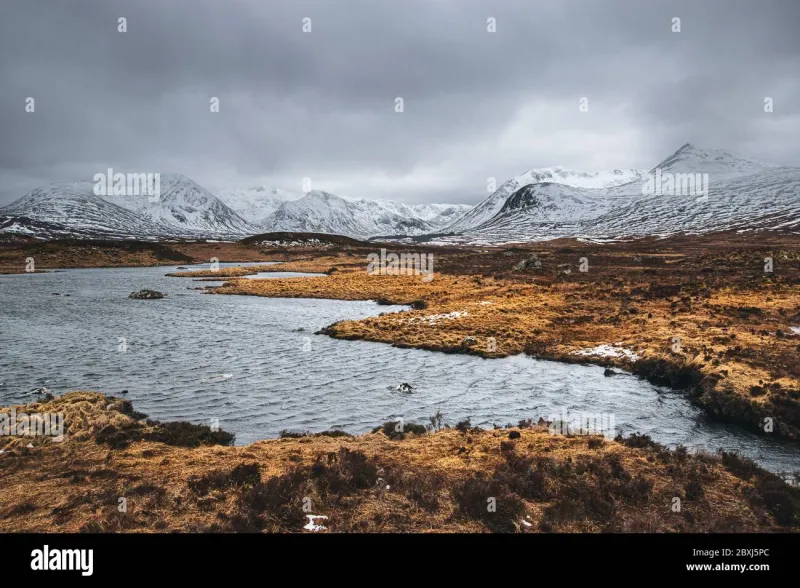
Dunbeath, sitting at the junction of cliff, strath, moorland and sea, is essentially a textbook restorative environment. The visual complexity of the landscape is high enough to hold your attention, but there's no urgency to it. The sound of the burn running down through the glen, the distant movement of waves, the occasional cry of a curlew overhead — none of it demands anything from you. It just is.
More recent research from the University of Exeter found that people living near coastal environments reported significantly better mental health outcomes than those further inland. Blue space, as it's been termed, appears to have measurable benefits for anxiety, mood, and general psychological wellbeing. Dunbeath has blue space in abundance — and then some.
What the Locals Say
Margaret, who has lived in the village for most of her adult life, laughs when you ask her about wellness tourism. "We just call it going for a walk," she says. But she's noticed the change in visitors over the past decade. "People used to come for Neil Gunn, or to fish, or to walk the strath. Now you get folk who've booked a cottage specifically because they need a proper rest. They arrive looking grey and they leave looking like human beings again."
She puts it down to the quiet. Not silence exactly — Dunbeath is rarely silent — but the absence of the particular kind of noise that grinds modern life down. No traffic. No sirens. No ambient hum of a city that never quite switches off.
David, who moved from Edinburgh four years ago and now works remotely while helping out on a local croft, describes his transition in almost physical terms. "The first week I was here I kept checking my phone compulsively. By the second week I was forgetting where I'd left it. By the end of the first month I'd genuinely stopped feeling that low-level anxiety I'd had for about fifteen years. I didn't even realise it had gone until I went back to Edinburgh for a weekend and it came straight back."
The Community Factor
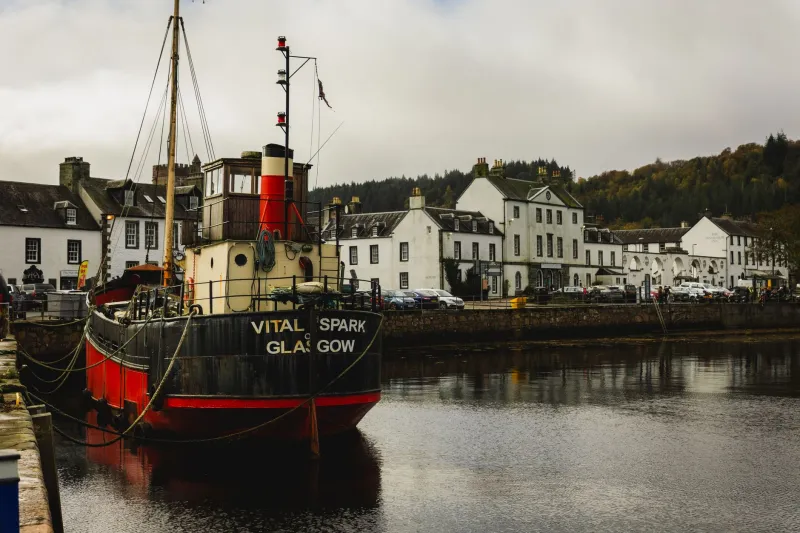
It would be too easy to reduce the Dunbeath effect to landscape alone. Community matters here, and it matters in a way that's increasingly rare in modern British life. This is a place where people know each other's names, where a stranger walking the harbour path is likely to receive a nod or a word, where the rhythms of village life — the tides, the seasons, the comings and goings of the fishing boats — provide a kind of collective structure that urban existence rarely offers.
Psychologists talk about the importance of "social scaffolding" — the informal network of connections that supports mental health without anyone necessarily being aware it's happening. Dunbeath has this in spades. You don't need to join anything or sign up for anything. You just need to be present, and the community quietly holds you.
What You Can Take Home
Here's the thing that nobody mentions in the wellness industry brochures: the practices that make Dunbeath restorative aren't proprietary. You don't need to buy a programme or download an app. They're almost embarrassingly simple.
Walk without a destination. Eat something you've cooked yourself, slowly. Sit somewhere with a long view. Talk to someone you don't know. Let a day pass without filling every gap in it.
Dunbeath makes these things easy because the environment actively supports them. But the principles travel. The question visitors keep asking themselves on the drive home is not "how do I find another place like this?" but "how do I carry a little of this back with me?"
The honest answer is that you probably can't replicate it fully. The light off the Caithness sea on a still autumn afternoon is not something you can bottle. But you can borrow the pace. You can borrow the permission to stop.
Why Now?
There's a reason Dunbeath is being discovered in this particular moment. The pandemic reshuffled a lot of people's priorities, and the staycation boom introduced corners of the UK to travellers who'd previously never thought to look north of Inverness. But those who came for novelty often stayed — or returned — for something deeper.
In an age of relentless stimulation, genuine quiet has become genuinely rare. Dunbeath offers it without ceremony, without charge, and without any particular expectation that you'll be grateful. It's simply there, doing what it's always done, while the rest of the world gradually works out that this is precisely what it needs.