Hands in the Soil, Eyes on the Past: How Dunbeath Is Teaching Children to Love History
Ask a child what they remember about a school trip and you'll rarely hear them describe a fact they read on a display panel. What they remember is the feel of something — the weight of a tool, the smell of a place, the moment a volunteer in period dress asked them a question and they actually knew the answer. They remember doing, not being told.
This is the insight that's quietly reshaping how Dunbeath presents its remarkable heritage to younger visitors. And the results — judged by the responses of children and the enthusiasm of the teachers accompanying them — suggest that this corner of the Caithness coast has stumbled onto something that bigger, better-funded heritage organisations are still struggling to crack.
A Village With More History Than It Knows What to Do With
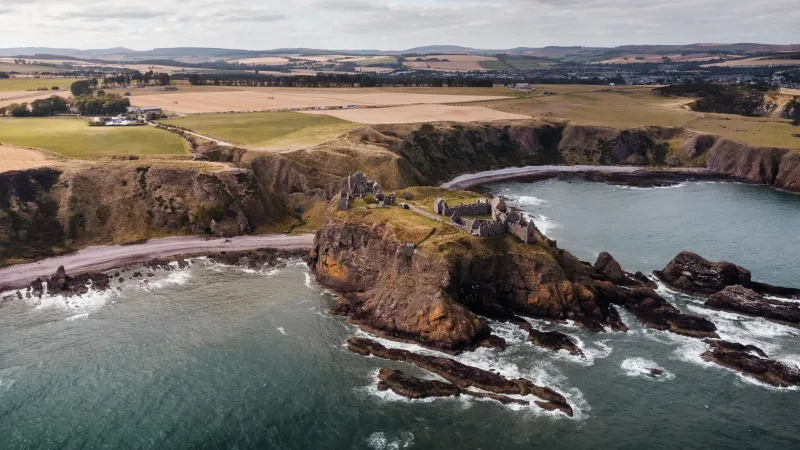
Dunbeath is, by any measure, historically extraordinary for a settlement of its size. Within a few miles of the village centre, you have a broch dating back over two thousand years, a castle with a documented history stretching across centuries of clan politics and coastal power struggles, a working heritage watermill, the birthplace of one of Scotland's most significant twentieth-century novelists, and a landscape that bears the marks of Bronze Age, Iron Age, Norse, and crofting-era occupation in layers you can literally walk across.
For adults, this density of history is part of the appeal. For children, it can be overwhelming if it's presented as a list of dates and names. The challenge — and it's one that Dunbeath's heritage community has been working on seriously — is how to make all of this tangible, immediate, and genuinely engaging for young people who have grown up with interactive everything.
The answer, it turns out, is surprisingly straightforward: put them in the landscape and give them something to do.
The Broch That Asks Questions Back
Dunbeath Broch, the Iron Age roundhouse that sits above the strath on a commanding ridge, is one of those heritage sites that speaks for itself architecturally. The walls are still substantial. The circular form is still legible. Standing inside it, even a child who's never heard the word 'broch' before will immediately understand that this was a structure built to last — and will want to know why.
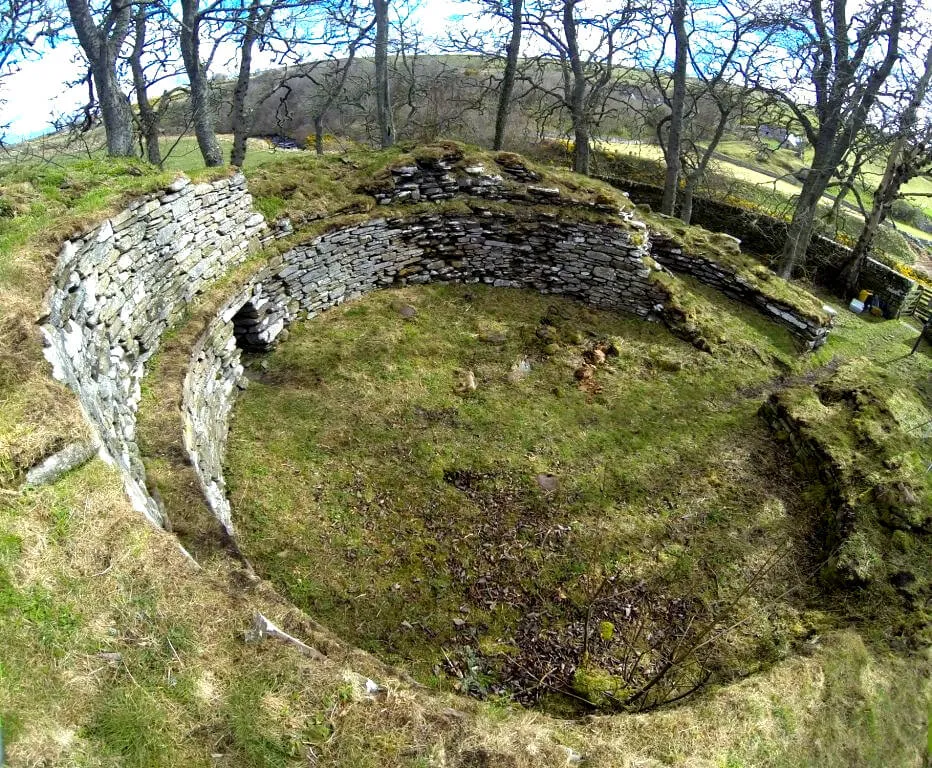 Photo: Dunbeath Broch, via www.berriedale-dunbeath.org
Local volunteers who lead visits to the broch have developed an approach that starts with questions rather than answers. How do you think they built this without cranes? What would you have kept inside? Why do you think they chose this exact spot? Children, it turns out, are excellent at working out the logic of the past when they're trusted to try — and the broch's position, commanding views up the strath and down to the sea, makes the defensive reasoning obvious once you're standing in it.
Some visits incorporate simple activities — sketching the structure, measuring wall widths, comparing the view from inside to the view from the ridge above. Nothing elaborate. But the physical engagement transforms the experience from passive observation to active investigation, and the questions children ask after a broch visit tend to be genuinely curious rather than politely dutiful.
The Watermill as a Living Classroom
If the broch is about imagining the distant past, the Dunbeath Heritage Watermill offers something different: history you can hear, smell, and watch in motion. The mill — restored and maintained by local heritage enthusiasts — is one of the few working examples of its kind in the north of Scotland, and its operational demonstrations are, by all accounts, the kind of thing that children simply don't forget.
The sound of the mechanism engaging, the smell of grain being ground, the sight of flour appearing from what looks like a collection of ancient wooden parts — these are sensory experiences that no classroom resource can replicate. Educators who've brought school groups to the mill consistently report that it generates some of the most sustained and genuine engagement they see on any field trip. Children who struggle to sit still in a classroom will stand watching the millstone turn for far longer than anyone expects.
The volunteers who run these demonstrations have also developed a knack for connecting the mill's story to broader social history in ways that children find immediately relatable. Who would have brought grain here? How far did they travel? What happened if the harvest was bad? The mill becomes a lens through which the whole texture of Highland rural life becomes comprehensible — not as a distant abstraction, but as something that real families in this exact valley actually lived.
Neil Gunn and the Power of a Story With a Postcode
Dunbeath's connection to the novelist Neil Gunn — born here in 1891 and shaped by this landscape in ways that run through almost everything he wrote — offers a different kind of educational opportunity. Literature can feel remote to children, particularly older literature. But when a story has a specific postcode, when you can stand on the ground where it happened and look at the river it describes, something shifts.
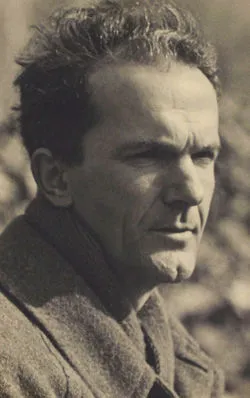 Photo: Neil Gunn, via static.wixstatic.com
Local educators have been developing resources that bring Gunn's work — particularly Highland River, his lyrical account of a boyhood spent exploring the strath — into direct dialogue with the landscape itself. Reading a passage from the book on the bank of the burn where the scene is set is a different experience from reading it in a classroom. The landscape confirms the story. The story illuminates the landscape. Children who've done this kind of site-specific literary exploration often return to the text with a genuine curiosity they didn't have before.
For school groups from further afield — particularly those studying Scottish literature or Highland history — this kind of place-based learning offers something genuinely rare: the chance to encounter a significant piece of Scottish cultural heritage not as a subject to be studied but as a place to be experienced.
What Makes It Work
Speak to any of the educators, volunteers, or community members involved in these programmes and a consistent theme emerges: the key is trust. Trusting children to ask good questions. Trusting them to handle real things — to touch old stone, to grind grain, to navigate a path without being shepherded every step of the way. Trusting the landscape itself to do some of the teaching.
This approach requires people who know the place deeply — not just its facts, but its feel. Dunbeath is fortunate to have them. The community's investment in its own heritage is genuine, and it shows in the quality of the encounters that visitors — young and old — come away with.
For UK families looking for a trip that offers their children something more lasting than a souvenir and a selfie, this is worth taking seriously. The history here is real, the people sharing it are passionate, and the landscape makes everything feel immediate in a way that no amount of clever interpretation can manufacture.
Some lessons, it turns out, are best taught outdoors.