Drop the Map: How Dunbeath Rewards Those Who Wander Without a Plan
Let's be honest about something. The blue dot on your phone's map has made you a worse traveller. Not a bad person — just someone who has gradually outsourced the best part of exploration to a satellite.
That best part? The bit where you don't quite know where you are. Where the path you're on might go somewhere brilliant or might double back on itself entirely. Where you have to make a decision based on instinct, or light, or the direction the wind is coming from, or the entirely irrational feeling that the interesting thing is probably down there, past the old wall.
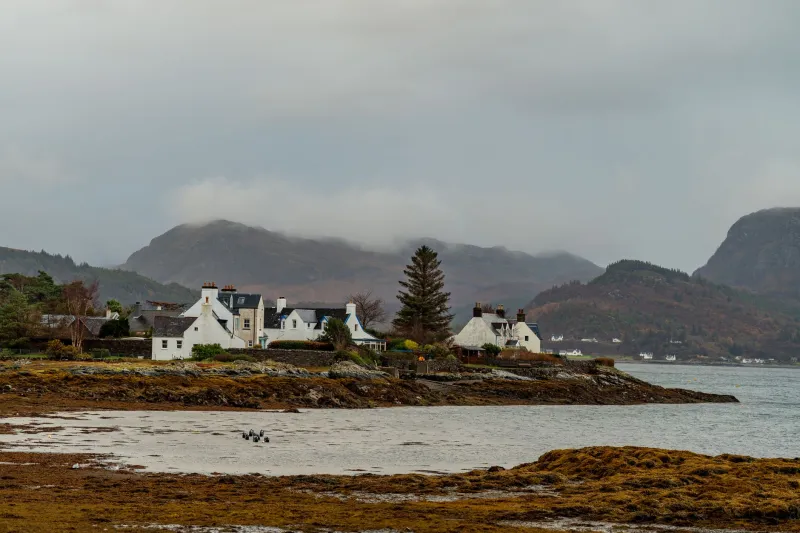
Dunbeath is one of the few places in Britain where you can still experience that feeling without it being manufactured for you. It's small enough to be safe, complex enough to be genuinely surprising, and old enough to have accumulated the kind of layered geography that rewards close, unguided attention.
The Problem with Knowing Where You're Going
When you arrive somewhere already knowing exactly where you'll go and in what order, you've essentially pre-digested the experience. You've traded discovery for efficiency. That's a perfectly reasonable trade in an airport, but it's a disaster in a place like Dunbeath.
The village and its surrounding landscape are full of things that don't appear on any official map or curated itinerary. Paths that have been walked for centuries without ever being formally marked. Corners of the strath where the light does something entirely unexpected in the late afternoon. Walls, ruins, and structures that aren't heritage sites in any official sense but are quietly extraordinary if you happen upon them.
None of these things will find you if you're staring at a screen. They only reveal themselves to people who are paying attention to the actual landscape rather than its digital representation.
A Practical Guide to Getting Pleasantly Lost
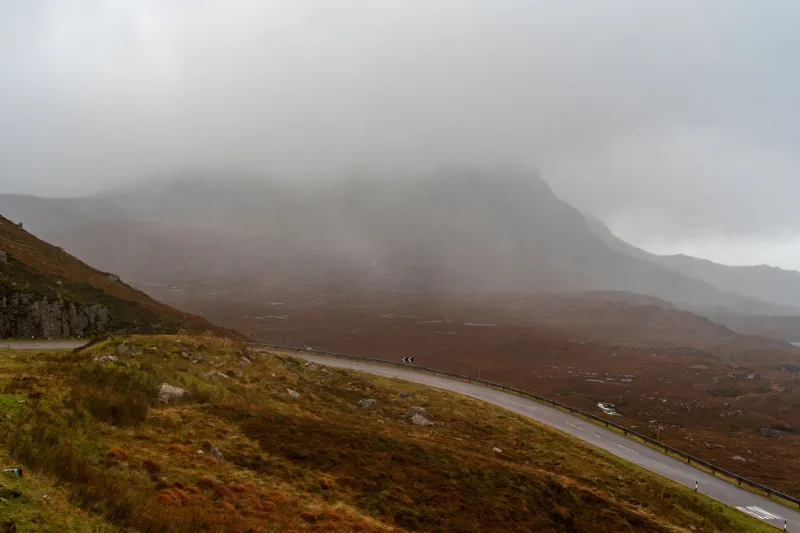
This isn't a suggestion to wander off into the hills without telling anyone where you're going. Highland terrain deserves respect, and common sense applies. But within those sensible limits, there's an enormous amount of room to roam without a plan.
Start at the harbour. It's a natural anchor point — you can always find your way back to the sea. From there, let yourself be pulled by whatever seems interesting. A gate that's slightly ajar. A chimney stack visible above a rise. The sound of water that suggests a burn you haven't seen yet.
Tell someone roughly where you're heading — not because Dunbeath is dangerous, but because it's considerate. Wear appropriate footwear, carry water, and keep an eye on the weather (which in Caithness can have opinions of its own). Beyond that, the main requirement is simply to leave your itinerary behind.
If you get turned around, you're probably not far from something interesting. If you end up somewhere you didn't expect, look around properly before you try to leave. Some of the best things visitors have found in Dunbeath have been found entirely by accident.
The Conversations You Only Have When You're Lost
Here's the thing nobody tells you about getting lost in a small Highland village: people notice. Not in an unwelcoming way — quite the opposite. If you're standing at a fork in a path looking slightly puzzled, there's a reasonable chance that someone will stop and ask if you're alright.
Those conversations are worth more than any guided tour.
A local who spots you looking confused at a particular stretch of the strath might mention, entirely in passing, that the field you're looking at was once used for something specific, or that the building you can see the roofline of has a history that's never been written down anywhere. They might tell you about a viewpoint that isn't in any travel piece because it requires knowing which overgrown track to follow. They might just point you in the right direction and get on with their day — but even that small interaction is part of understanding how the place works.
Being lost, in other words, is a social lubricant. It creates openings that purposeful navigation closes off entirely.
Why Unfamiliar Terrain Feels Like Freedom
There's a psychological dimension to this that's worth naming. Psychologists who study exploration suggest that mild disorientation — the kind where you're not sure exactly where you are but you're not frightened — activates a different kind of attention. You notice more. Your senses sharpen slightly. Time slows down in the best possible way.
This is why children find almost any environment fascinating and adults find most environments boring. Children are almost always slightly lost. Adults almost never allow themselves to be.
Dunbeath's particular geography — the way the strath opens and closes, the way the coast shifts between dramatic and intimate, the way the village itself sits at the meeting point of several different kinds of landscape — makes it unusually good at producing this effect. You can walk for twenty minutes and feel like you've moved through three distinct worlds. That disorientation isn't a problem to be solved. It's the experience itself.
The Route That Isn't a Route
If you absolutely need a starting point: leave the harbour, walk inland along the strath, and at some point, stop following the obvious path. Go towards the water. Go up a rise you can see. Follow a wall to see where it ends.
Then come back a different way. Or a way that turns out not to be a way at all, which means you'll have to improvise, and improvising is when things get interesting.
Bring a camera if you like, but don't let it become another form of navigation. The best photographs from Dunbeath are the ones taken of something nobody was planning to photograph.
Drop the map. You'll find more without it.