Curious Minds from a Coastal Village: Dunbeath's Quiet Intellectual Legacy
Curious Minds from a Coastal Village: Dunbeath's Quiet Intellectual Legacy
There's a moment that catches many visitors off guard. You're chatting with someone at the harbour, or perhaps leaning over a gate on the strath, and the conversation takes a turn you didn't quite expect. A reference to Norse settlement patterns. A considered opinion on land reform. A half-remembered quote from a novel you've been meaning to read for years. It happens more than once in Dunbeath, and it's not a coincidence.
This is a village that has always taken ideas seriously.
The Schoolroom at the Heart of Things
For centuries, the parish school was one of the most important buildings in any Scottish Highland community. This wasn't simply about reading and arithmetic — it was about survival, ambition, and the belief, deeply embedded in Scottish culture, that education was a ladder worth climbing regardless of how steep the rungs might be.
Dunbeath was no different. Records from the eighteenth and nineteenth centuries show a consistent effort to maintain schooling even as the wider Highlands struggled with clearances, poverty, and the slow erosion of Gaelic-speaking communities. The village's relative stability — anchored by fishing, crofting, and a tight-knit social fabric — meant that generations of children had access to teachers who genuinely invested in their pupils.
Those teachers mattered enormously. In a remote coastal settlement, the schoolmaster was often the most widely read person for miles around. He (and occasionally, in later years, she) brought books, debated ideas, and encouraged children to ask questions that went well beyond the curriculum. The effect was cumulative. Families who valued learning passed that value on. Siblings encouraged one another. The culture fed itself.
Neil Gunn and the Grammar of a Place
You can't talk about Dunbeath's intellectual heritage without arriving, sooner or later, at Neil Gunn. Born here in 1891, Gunn went on to become one of Scotland's finest novelists — a writer whose work explored the inner life of Highland communities with a depth and psychological complexity that still feels startlingly modern. But Gunn wasn't an anomaly. He was a product.
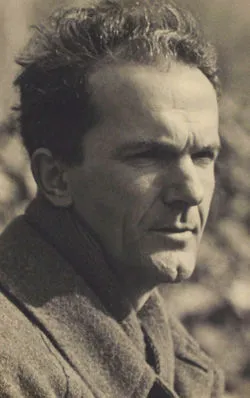 Photo: Neil Gunn, via static.wixstatic.com
His early education in Dunbeath gave him the foundations, but it was the village itself — its harbour conversations, its strath walks, its ancient brochs and salmon pools — that gave him the material. Gunn often spoke of the way his childhood landscape shaped his thinking, not just emotionally but intellectually. The sea teaches patience and unpredictability in equal measure. The strath teaches you to read the land. These aren't small lessons.
What's easy to overlook is that Gunn was surrounded by other curious minds. His family, his neighbours, the fishermen who debated politics and theology on the harbour wall — all of them contributed to an environment where thinking was considered worthwhile. That environment didn't disappear when Gunn left for Edinburgh. It stayed, and it reproduced itself in subsequent generations.
What the Community Remembers
Speak to long-term Dunbeath residents today and a pattern emerges. Many can name a specific teacher — sometimes from decades ago — who changed the direction of their lives. A woman in her seventies recalls a schoolmaster who ran a lunchtime reading group, entirely off his own bat, working through Scottish history with a handful of interested pupils. A retired fisherman remembers being encouraged to write down the stories his grandfather told, a habit that eventually led him to deposit a remarkable oral history archive with a local museum.
These aren't grand gestures. They're the quiet accumulation of attention — people being noticed, being taken seriously, being told that what they thought and felt and knew was worth something.
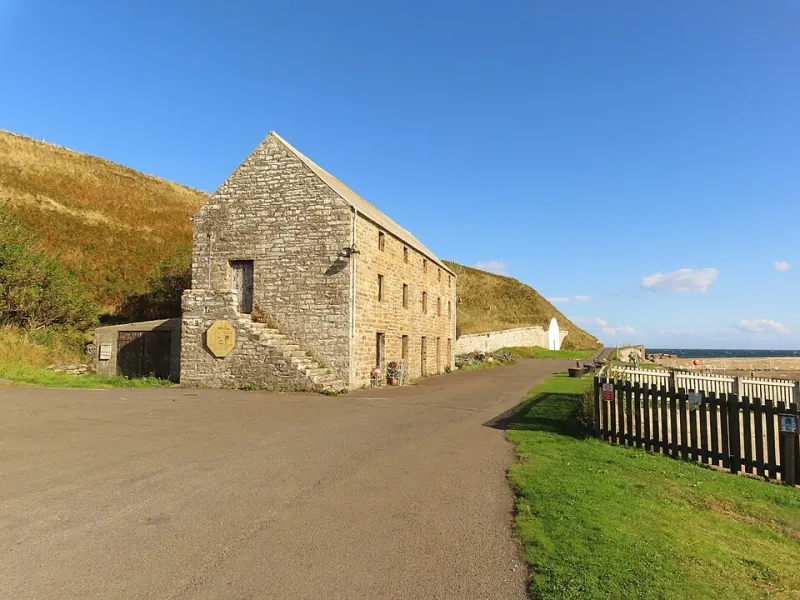
That ethos shows up in the way the community engages with its own heritage. The Dunbeath Heritage Centre isn't just a collection of artefacts behind glass. It's a place where local knowledge is actively gathered, curated, and shared. Volunteers bring genuine expertise — in archaeology, in social history, in the fine-grained details of how people actually lived along this stretch of coast. Visitors frequently remark on the quality of the conversations they have there.
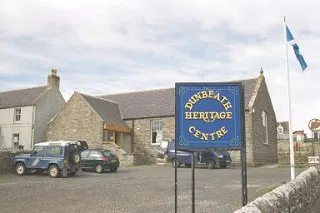 Photo: Dunbeath Heritage Centre, via www.scottish-places.info
Why It Still Matters
There's a tendency, when we talk about rural communities, to frame intellectual life as something that happens elsewhere — in universities, cities, cultural institutions. Dunbeath quietly challenges that assumption. The curiosity here was never imported from outside. It grew from the ground up, shaped by necessity, by landscape, and by the accumulated effect of people who believed that knowing things was worth the effort.
For visitors, this creates something genuinely unusual: a place where the heritage isn't just physical. The stories, the arguments, the local expertise — these are part of what Dunbeath offers. Come with questions and you'll find people willing to engage with them properly.
That, in its own way, is the schoolmaster's legacy. Not a building or a curriculum, but a habit of mind that this small coastal village has somehow kept alive.