Wild Harvest: A Forager's Guide to Eating from Dunbeath's Cliffs, Shore and Moorland
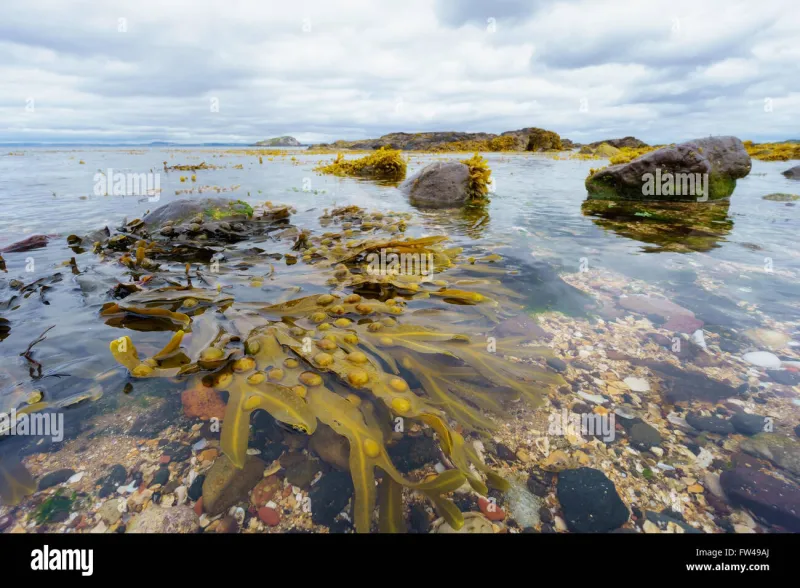
Photo: foraging seaweed wild plants Scottish coastline rocky shore, via www.alamy.com
There's a moment, crouching on a rock shelf at the base of Dunbeath's sea cliffs with the tide retreating around your boots, when the penny drops. This isn't wilderness. Not really. It's a larder. An enormous, tidal, wind-battered larder that's been feeding people in this corner of Caithness for thousands of years.
Foraging has had a bit of a fashionable revival in recent years — you'll find it on restaurant menus from Shoreditch to Soho — but around Dunbeath, the practice never really went away. It just got quieter. The knowledge passed between neighbours rather than through cookbooks, and the ingredients ended up in kitchen pots rather than on Instagram.
We spent a morning with Fiona, a Caithness-born cook and self-taught forager who has been harvesting from this coastline since she was old enough to follow her grandmother down to the shore. She's emphatic on one point before we begin: "Know what you're picking. If you're not certain, leave it. The land here is generous, but it rewards attention."
The Shore: Where the Sea Feeds You
The rocky coastline around Dunbeath is exceptionally productive. At low tide, the exposed rock platforms reveal an extraordinary variety of edible seaweeds, and Fiona moves through them with the easy confidence of someone reading a familiar map.
Sea lettuce (Ulva lactuca) is the beginner's starting point — vivid green, paper-thin, and hard to mistake for anything harmful. It can be eaten raw in salads, dried and crumbled over fish, or briefly fried in butter until it crisps. "It tastes like the sea smells," Fiona says, which is either a recommendation or a warning depending on how you feel about that.
Dulse (Palmaria palmata) is the more substantial option — a dark reddish-purple frond that dries well and has been eaten across the Scottish and Irish coastline for centuries. Pan-fried in a little oil, it develops an almost bacon-like umami quality that makes it genuinely addictive.
Carrageen moss (Chondrus crispus) is a traditional Highland ingredient used as a natural setting agent in puddings and broths. Fiona collects it in small quantities, rinses it thoroughly, and uses it to thicken a simple fish chowder — a recipe her grandmother made, and her grandmother before that.
A word of caution: always harvest seaweed well above the low-tide mark, away from any potential sources of agricultural or sewage runoff, and never take more than a third of what's growing in any one spot. These are shared resources, and the sea doesn't owe you a full basket.
The Cliffs and Braes: Higher Ground, Different Bounty
Move up from the shoreline and the foraging character shifts entirely. The grassy cliff tops and the lower slopes of the strath offer a different seasonal calendar, and Fiona navigates it with the same unhurried confidence.
In late summer and early autumn, wild raspberries are scattered through the scrubby vegetation along the strath path — smaller and more intensely flavoured than their cultivated cousins, and worth every scratched forearm it takes to reach them. Nearby, rowan berries cluster in brilliant orange-red bunches on the trees that line the burn. Too bitter to eat raw, they transform with sugar and cooking into a vivid jelly that pairs beautifully with venison or game — a staple of traditional Highland cooking that deserves to be better known.
Wood sorrel appears in shaded, damp spots — a delicate, clover-like plant with a sharp, lemony bite that lifts salads and sauces. Chickweed, which most gardeners treat as a nuisance, grows in abundance here and is genuinely good eaten fresh, with a mild, slightly grassy flavour.
On the open moorland above the village, bilberries (known locally as blaeberries) ripen in late July and August — low-growing, small, and extraordinarily flavourful. They stain your fingers purple and your mouth blue and are worth every moment of the slow picking.
Mushrooms: Proceed with Knowledge
Fiona is measured on the subject of mushrooms, and rightly so. "There are fantastic edible species around here," she says, "but this is not the place to start experimenting if you don't know what you're doing."
The moorland and woodland edges around Dunbeath do produce chanterelles in a good year — golden, funnel-shaped, and unmistakable once you've seen them in the flesh. Velvet shanks appear on dead wood in autumn and winter. But Fiona's advice is firm: go with someone who knows, or invest in a good field guide and take a cautious, incremental approach. The foraging community in Caithness is small but welcoming, and local knowledge is worth more than any book.
Fiona's Seaweed and Potato Broth
This is not a complicated recipe. It's an old one, adapted slightly, and it tastes of the place it comes from.
Sweating a chopped onion and two cloves of garlic in butter until soft, add diced floury potatoes and enough vegetable or fish stock to cover generously. Simmer until the potatoes are tender, then add a good handful of rinsed dulse and sea lettuce in the last five minutes of cooking. Season with black pepper — it needs very little salt — and finish with a splash of cream if you have it. Eat it looking out at the sea, ideally.
The Ethics of It
Foraging done well is an act of attention and restraint. The landscape around Dunbeath has sustained people for millennia precisely because those people understood limits. Take what you need. Leave plenty. Come back next year and find it waiting.
There's something quietly radical about eating food you've gathered yourself from a specific piece of coastline. It collapses the distance between you and the land in a way that no farmers' market, however excellent, quite manages. You know where it came from. You know what it cost — in time, in attention, in willingness to get your boots wet.
That, perhaps, is the oldest form of slow food there is.