Silver Darlings and Salt Skin: How Dunbeath's Herring Girls Fed Half of Britain
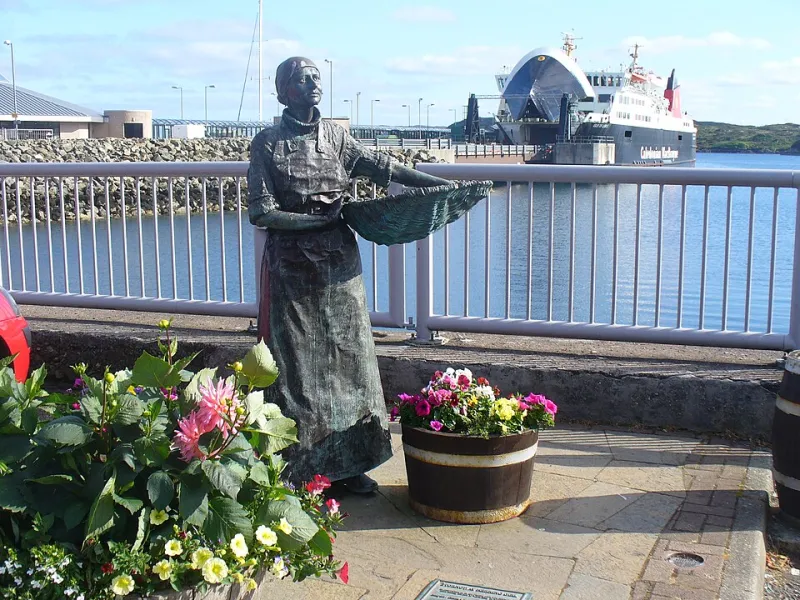
Photo: Colin Smith , CC BY-SA 2.0, via Wikimedia Commons
Stand on the harbour wall at Dunbeath on a still evening and it takes real effort to imagine the noise. Today there's the slap of water against stone, a few creels stacked in ranks, maybe a heron working the shallows by the river mouth. A century ago, you'd have struggled to hear yourself think over the steam winches, the cry of gulls in their thousands, and the rhythmic scrape of knives on a sharpening steel.
This was a herring port. And not a bit-part player, either.
The Fish That Built the Village
The herring fishery was the industrial engine of the east coast Highlands, and Dunbeath punched well above its weight for a village of a few hundred souls. When the shoals — the 'silver darlings' — arrived offshore, the harbour filled with boats and the shore filled with barrows, barrels and salt. Herring was Britain's staple protein: cheap, plentiful, and cured in Caithness oak before being shipped to feed workers in London, Glasgow and beyond. An entire economy fitted inside one small harbour, and you can still read its shape in the buildings around you — the fish stores, the cooper's premises, the long low houses built by families who did well out of the boom.
The Women Who Followed the Fish
Here's the part of the story that deserves far more fame than it gets. When the boats sailed south, the herring girls sailed with them.
These were teams of women — often sisters, cousins, neighbours from the same strath — who travelled the length of Britain's east coast chasing the fishing seasons. Dunbeath to Shetland, then down to Fraserburgh, Peterhead, and finally Great Yarmouth for the autumn spectacle. They gutted and salted the catch on the quayside, standing for twelve-hour shifts in oilskins and waterproof aprons, knives moving faster than the eye could comfortably follow. They earned their own money, slept in bothies, sang in their own voices and carried the name of their home village to every port on the map.
Local memory here still holds them close. Ask in the village about the herring girls and you'll hear of grandmothers who could gut a herring in seconds flat, who saved their wages for crofts and clocks and a bit of independence in an age when women were rarely offered either.
Reading the Harbour Today
The beauty of Dunbeath's heritage is that it isn't locked behind glass. Walk the harbour from the slipway to the river bridge and you're walking the same stone the fleet landed on. The old drying green where nets were spread still slopes toward the water. The harbour itself, with its curved breakwater sheltering the mouth of the Dunbeath Water, was shaped by exactly this trade.
For a deeper dive, the Dunbeath Heritage Centre holds photographs from the fishery's heyday — rows of women in headscarves, knives in hand, mountains of silver behind them. Match an archive image to the modern quayside and you get one of those rare, spine-flickering moments where the past lines up almost perfectly with the present.
Why It Matters
The herring boom faded, as booms do — overfishing, war, and changing tastes saw to that. But the fishery left something durable behind: a culture of hard work, self-reliance and travel, and a diaspora of Dunbeath families scattered down the east coast from Leith to Lowestoft.
So next time you pull through on the coast road, don't just photograph the harbour. Stand on it a moment. Somewhere beneath your boots is the story of a village that fed a nation — and the remarkable women who carried its name the length of the country, one barrel of herring at a time.