Before the World Wakes: A Dawn Forager's Morning on the Dunbeath Shore
The alarm goes at half four. Outside, the sky above the cliffs is the colour of a bruise — dark purple bleeding into charcoal at the eastern edge. The tide chart on the kitchen table was consulted the night before, a habit so ingrained in Dunbeath households it barely registers as planning. Low water is at 5:47. That's the window.
This is how the day starts, if you're doing it properly.
The Logic of the Early Start
Dawn foraging and sea fishing aren't romantic affectations in Dunbeath — they're practical traditions shaped by tidal rhythms that predate any living memory. The shore and the sea give most generously in the hours around low water, and low water doesn't negotiate with your sleep schedule. So you get up.
The payoff, beyond anything you might actually catch or gather, is the morning itself. Dunbeath at five o'clock belongs to a different category of experience than Dunbeath at noon. The haar — that dense coastal mist that rolls in off the North Sea — sometimes sits low over the harbour, softening the outlines of the boats and muffling the sound of the water. On clear mornings, the stars are still out when you reach the shore, and the first light arrives so gradually you almost miss the moment it tips from dark to grey.
Bring a head torch. And layers. Always layers.
What the Shore Offers
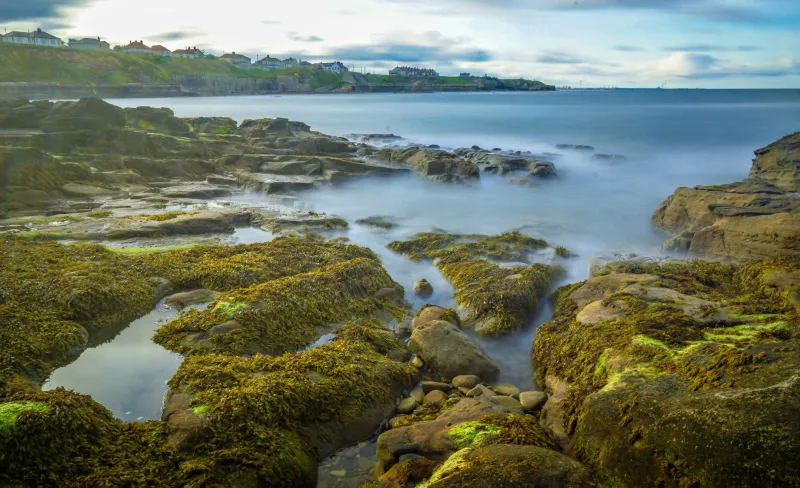
The rocky foreshore around Dunbeath is a forager's reference text, every rock pool a chapter. The key is learning to read it without disturbing it — lifting stones gently, replacing them in the same orientation, taking only what you'll use.
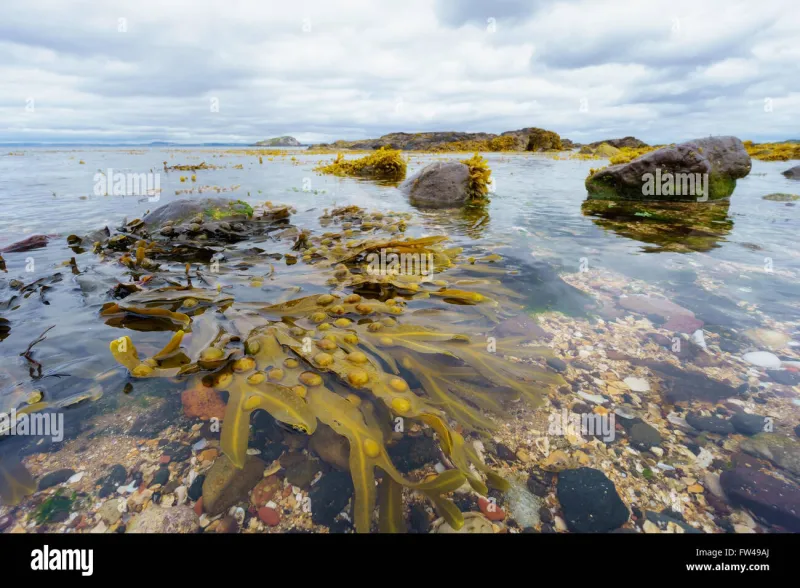
Periwinkles are the easiest starting point and a good one for beginners. They cluster in the mid-shore zone, small and dark, clinging to exposed rock surfaces. Gather them into a bucket and you've got the makings of a proper Highland broth before most people have poured their first coffee. A handful of bladderwrack seaweed — the knobbly stuff with the satisfying bubbles — can go straight into a stock pot, and it's everywhere along this stretch of coast.
Sea purslane grows in the salt marsh at the mouth of the Dunbeath Water where the river meets the sea, its small fleshy leaves carrying an intense mineral saltiness that does extraordinary things alongside smoked fish. Rock samphire appears on the cliff faces — less accessible, but worth the scramble if you know what you're looking at. Its feathery fronds smell of aniseed and the sea simultaneously.
A word on timing: the lowest tides of the month expose rock that's normally submerged, and this is where the real prizes are. Mussels in dense clusters. The occasional flat periwinkle. If you're lucky and you know your shellfish well, you might find a patch of razor clams betrayed by their telltale keyholes in the sand.
Always check shellfish advisories before harvesting bivalves on any stretch of Scottish coastline. The Marine Scotland website carries up-to-date information, and it matters.
The Rod Goes in While the Kettle's Still On
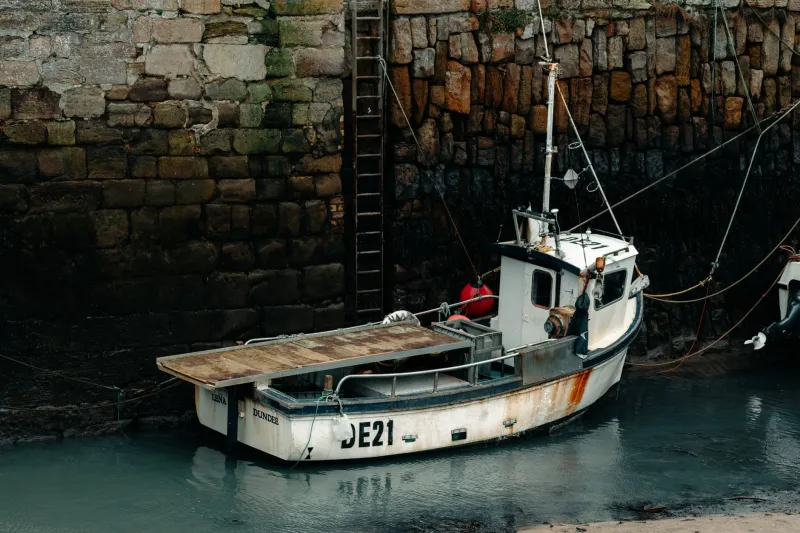
Sea fishing and foraging aren't competing activities here — they're complementary ones, and the locals treat them as such. While periwinkles are bubbling in the pot back at the cottage, the rod is propped against a rock at the harbour wall or on the lower shore, a simple ledger rig doing its patient work in the current.
Mackerel are the reliable reward through summer and into early autumn — they come close to shore in the half-light, chasing sand eels, and a simple feather rig cast into the harbour mouth will often produce results within twenty minutes. Coalfish, known locally as saithe, are present most of the year and particularly obliging around dawn. They're underrated on the table — firm, white flesh that takes smoking beautifully — and they fight well on light tackle.
The meditative quality of this combination — the passive wait of a fishing line alongside the active, attentive work of foraging — creates a particular mental state that's hard to manufacture any other way. You're busy enough to stay present, but not so busy that you can't hear the oystercatchers starting up on the rocks, or notice the exact moment the sky behind the clifftop turns from grey to gold.
What Comes Next
By seven o'clock, if the morning's been kind, you might have a small bucket of periwinkles, a handful of samphire, a bunch of fresh bladderwrack, and two or three mackerel filleted on the harbour wall. That's a meal. Several meals, actually.
The traditional Caithness treatment for periwinkles is the simplest: boil them in well-salted water for three minutes, drain, and eat them with a pin and a good deal of patience. The mackerel can be pan-fried with nothing but butter and the samphire alongside it, which is as good a breakfast as anywhere in Scotland can offer.
But there's an argument that the real yield of a Dunbeath dawn isn't what ends up on the plate. It's the two hours themselves — the cold air, the particular silence of a coast before the wind gets going, the sensation of being usefully occupied in a very old way. The food is the evidence. The morning is the point.
A Few Practical Notes
- Tide times for Dunbeath can be found via the UK Hydrographic Office's EasyTide service, or through most fishing apps. Plan your morning around the two hours either side of low water.
- Footwear matters enormously. Rubber-soled boots with ankle support are essential on wet rock; wellies are fine for the flat shore but treacherous on anything uneven.
- Foraging responsibly means taking no more than a third of what you find in any given spot, leaving the habitat intact, and never foraging in areas near outflows or industrial activity.
- The harbour wall at Dunbeath is a productive fishing spot on an incoming tide, particularly in the early morning. No permit is required for sea fishing from the shore in Scotland.
The alarm goes off at half four. It's worth it. It really is.