Highland Renaissance: Young Makers Choosing Caithness Craft Over City Life
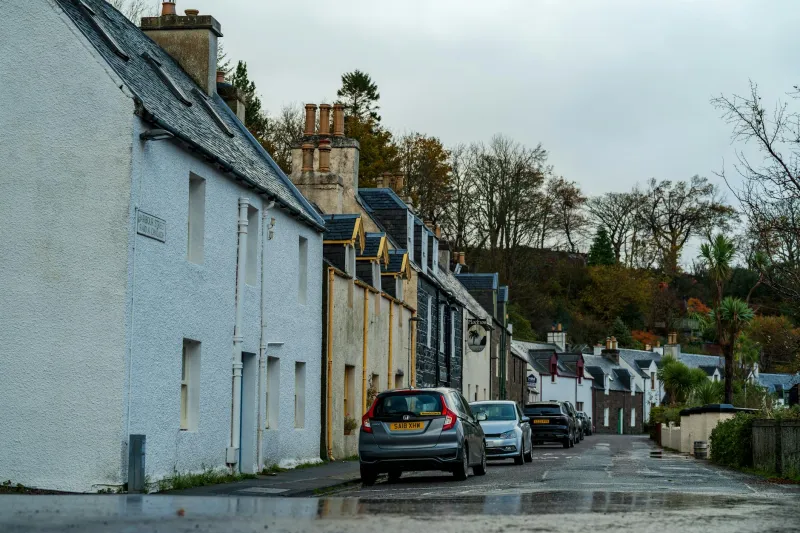
Something remarkable is happening in the workshops and crofts around Dunbeath. While headlines focus on young Scots leaving rural communities for city opportunities, a quiet counter-movement is taking root. A new generation of craftspeople is choosing Highland heritage over metropolitan hustle, trading corner offices for corner stones, and finding purpose in preserving skills that once defined Scottish coastal life.
The Boat-Builder's Apprentice
Twenty-eight-year-old Isla MacLeod left her Edinburgh marketing job three years ago to learn traditional boat-building from Hamish Sinclair, whose family has worked Dunbeath's harbour for five generations. Her Instagram followers might have expected career suicide; instead, they've watched her document the rebirth of a dying art.
"Everyone thought I'd lost my mind," Isla laughs, sawing precise joints for a traditional Caithness yole. "But in Edinburgh, I was building nothing that mattered. Here, I'm creating something that will outlast me, using skills that connect me to centuries of Highland maritime culture."
Hamish, now in his seventies, initially doubted whether a "city lass" could master the demanding craft. "But Isla has the patience and the passion," he admits, watching her steam oak ribs into perfect curves. "She understands that good boat-building can't be rushed—just like good whisky or good relationships."
Isla's work extends beyond restoration. She's designing modern interpretations of traditional craft, creating rowing boats that honour historical techniques while incorporating contemporary safety features. Her waiting list stretches two years, with orders from heritage enthusiasts across Scotland and curious yacht owners seeking authenticity in an increasingly artificial world.
Weaving New Stories from Old Threads
In a converted byre overlooking Dunbeath Strath, Callum Ross operates looms that his great-grandmother would recognise. The 24-year-old abandoned his Glasgow law studies to revive his family's weaving tradition, but his interpretation of Highland textiles challenges every assumption about traditional craft.
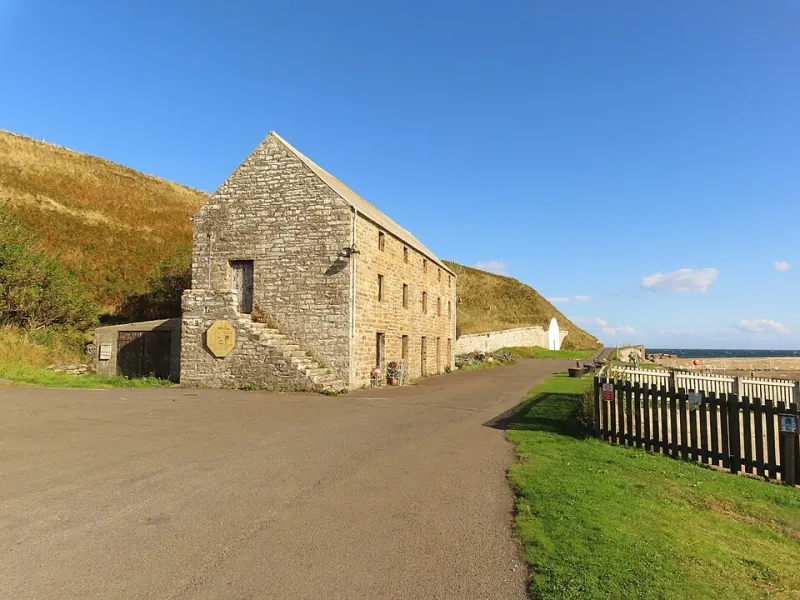
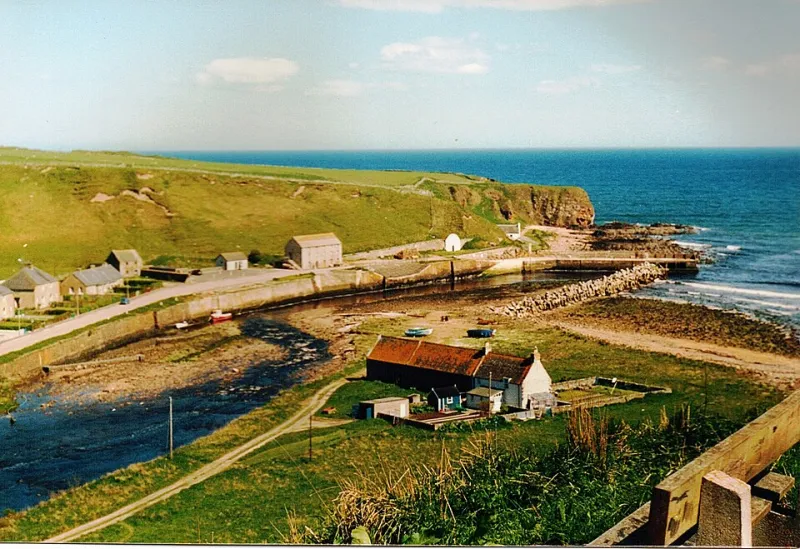
 Photo: Dunbeath Strath, via images2.corriereobjects.it
"Highland weaving isn't museum piece," Callum insists, showing off tweeds that incorporate recycled fibres and experimental dyes created from local seaweed and moorland plants. "It's a living language that should evolve while respecting its grammar."
His workshop buzzes with activity that would astonish traditional weavers. Local sheep provide wool, but Callum also experiments with fibres from Highland cattle, even testing kelp-based materials that could revolutionise sustainable textiles. His designs catch the eye of fashion houses seeking authenticity, but he insists on keeping production small and local.
"Fast fashion is killing our planet and our communities," he explains, threading his loom with wool dyed purple using elderberries from Dunbeath gardens. "Highland weaving offers a different model—slow, sustainable, connected to place. My great-grandmother understood this instinctively."
Callum employs two other young weavers, both refugees from unsatisfying city careers. Together, they're building a business model that prioritises craft quality over quantity, proving that traditional skills can support modern livelihoods without compromising artistic integrity.
The Stone Whisperer
Megan Campbell discovered her calling in the ruins of Dunbeath Castle. A former Aberdeen engineering student, she was hiking the coastal path when she noticed how centuries-old masonry still stood firm against Atlantic storms while modern buildings crumbled after decades.
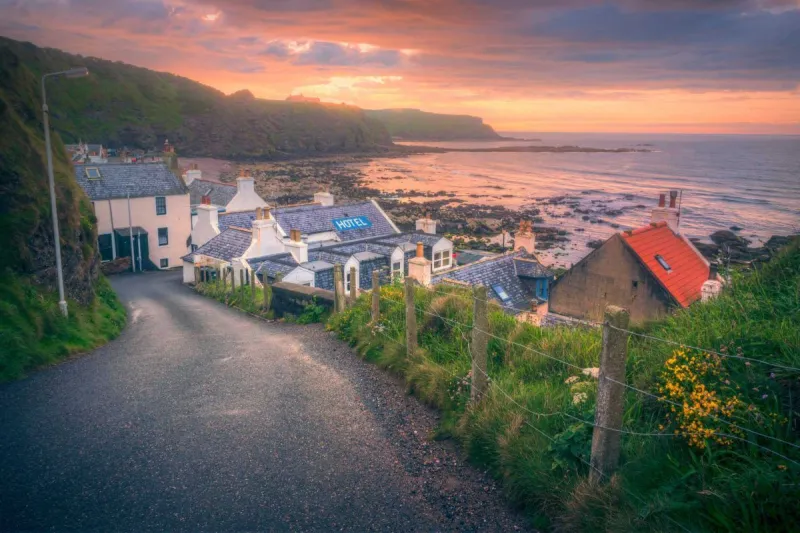
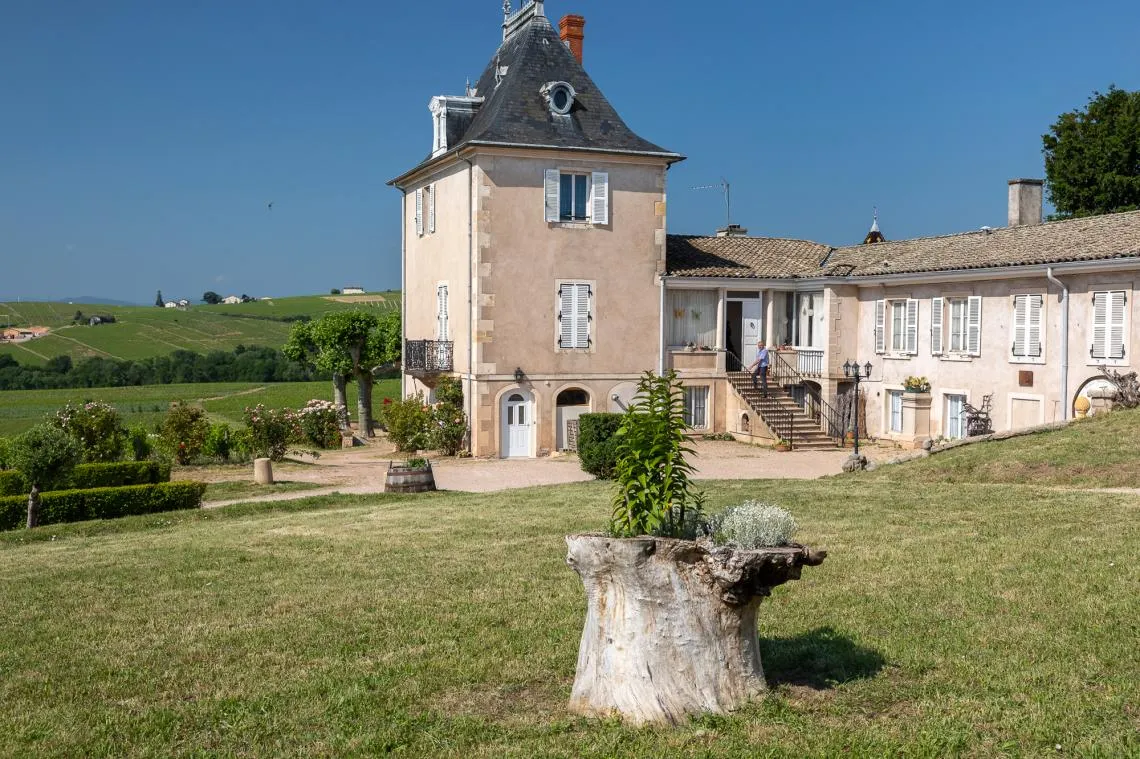 Photo: Dunbeath Castle, via www.vins-bourgogne.fr
"Stone tells stories," Megan explains, pointing to different textures in a wall she's restoring. "This piece came from the shore—you can see the salt weathering. This section is local flagstone, cut when the castle was extended. Understanding these stories makes you a better stonemason."
Megan learned her craft from Willie Sutherland, whose family has worked Caithness stone since the Victorian era. Initially sceptical about teaching a woman, Willie now considers Megan his finest student. "She has the eye," he says simply. "You can't teach that."
Her work extends beyond restoration. Megan creates contemporary sculptures that interpret Highland landscapes in stone, but she also maintains traditional skills that few young people possess. She can build dry-stone walls that will stand for centuries, carve headstones that honour both deceased and craft traditions, and select stones that will weather Highland storms with dignity.
"Engineering taught me about forces and structures," she reflects, "but stone-working taught me about time and patience. In the city, everything was disposable. Here, I'm building permanence."
The Digital Craft Revolution
These young makers share more than Highland location—they're pioneering new models for traditional crafts. Social media showcases their work to global audiences while maintaining local roots. Online sales fund traditional apprenticeships. Digital documentation preserves techniques that might otherwise disappear with elderly masters.
Isla live-streams boat-building workshops for international audiences, funding her apprenticeship through virtual teaching. Callum's Instagram account has become a masterclass in sustainable textiles, inspiring makers worldwide while celebrating Caithness heritage. Megan's YouTube channel documents restoration techniques, preserving knowledge for future generations while building her reputation among heritage organisations.
Beyond Romantic Revival
This isn't nostalgic escapism but practical renaissance. These young makers understand that traditional crafts must adapt to survive. They embrace technology as a tool for preservation and promotion while maintaining the slow, careful standards that define quality craftsmanship.
"We're not trying to recreate the past," Callum emphasises. "We're using traditional wisdom to build sustainable futures. Highland crafts developed because they worked—they used local materials, created lasting products, and supported communities. Those principles are more relevant now than ever."
The Highland Craft Economy
Their success challenges assumptions about rural economic development. Rather than chasing urban industries or tourist attractions, these makers are proving that traditional skills can support thriving modern businesses. Their workshops employ local people, source materials regionally, and create products that command premium prices precisely because they're rooted in place and tradition.
Visitors increasingly seek authentic experiences over manufactured attractions. Watching Isla shape boat ribs or Megan carve stone provides insights into Highland culture that no visitor centre could match. These workshops are becoming informal tourist destinations, generating income while preserving heritage.
The Future of Highland Making
As word spreads, more young people are discovering opportunities in traditional crafts. Megan recently took on her first apprentice—a former Glasgow architect seeking meaningful work. Callum is developing partnerships with art schools to teach traditional weaving techniques. Isla plans to establish a proper boat-building school, ensuring these skills survive for future generations.
Their success suggests that Highland communities need not choose between tradition and progress. By respecting the wisdom embedded in traditional crafts while embracing contemporary opportunities, these young makers are writing new chapters in Scotland's cultural story—one careful stitch, perfectly fitted stone, and lovingly crafted boat at a time.
In Dunbeath's workshops, the future is being shaped by hands that honour the past while building tomorrow. It's a quiet revolution, but perhaps the most important kind.