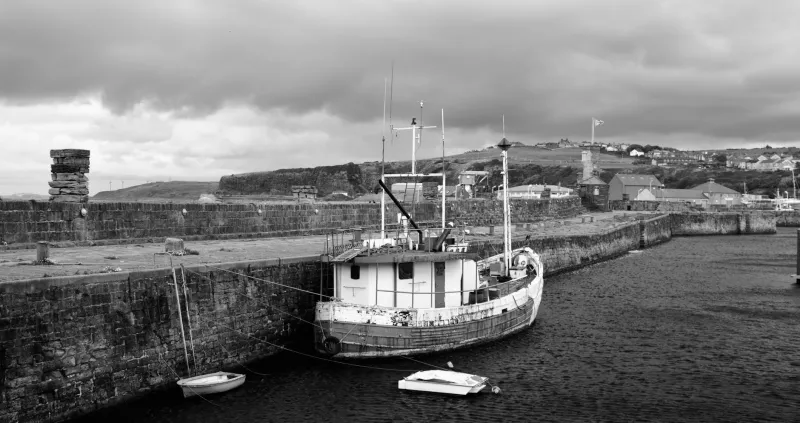
The morning mist still clings to Dunbeath harbour, but something's missing. Where once the sweet, woody perfume of oak smoke mingled with salt spray, now only seagulls break the silence. Yet if you know where to look—and more importantly, who to ask—the ghosts of Dunbeath's smokehouse legacy still whisper their secrets.
The Harbour That Breathed Smoke
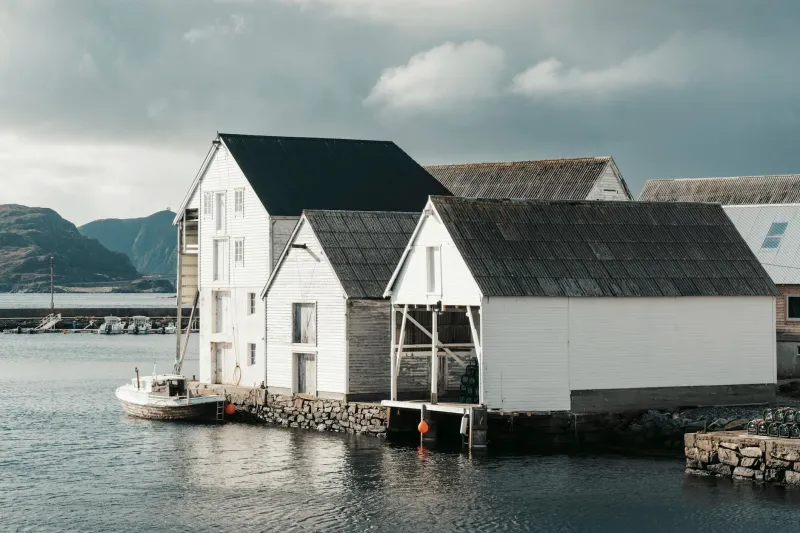
Picture Dunbeath harbour in 1890. Before dawn breaks, the fishing boats return heavy with herring, their silver cargo destined not for distant markets but for the cluster of low stone buildings that line the waterfront. These weren't just storage sheds—they were temples to an ancient craft that kept Highland communities fed through the harshest winters.
Mary MacLeod, now 87 and one of Dunbeath's most treasured storytellers, remembers her grandmother's tales of the smokehouse days. "Gran would say you could smell Dunbeath from miles away," she recalls, settling into her favourite chair overlooking the harbour. "Not in a bad way, mind you. It was the smell of prosperity, of families knowing they'd eat well come February's storms."
The process began at first light. Fresh herring, still glistening from the North Sea, were split and gutted with practiced precision. But here's where Dunbeath's fish curers revealed their artistry—in the delicate balance of salt, time, and flame that transformed humble fish into something approaching culinary gold.
Secrets Written in Salt
Each family guarded their curing recipe like a state secret. The MacKays favoured a heavy salt cure followed by three days over smouldering birch. The Sinclairs swore by their lighter touch—less salt, more smoke, with whispers of heather thrown onto the coals during the final hours. The Gunns, practical as always, developed a method that could handle the largest catches in the shortest time, perfect for those bumper seasons when the herring ran thick as soup.
"It wasn't just about preservation," explains Dr. James Henderson, a maritime historian who's spent years documenting Highland fishing traditions. "These families were creating distinct flavours, building reputations that stretched from Wick to Inverness. A Dunbeath-cured herring had a particular taste—smoky but not overpowering, with just enough salt to enhance rather than mask the fish's natural sweetness."
The smokehouses themselves were marvels of practical engineering. Stone foundations kept the structures stable against North Sea gales, while carefully positioned vents controlled airflow with surgical precision. Inside, wooden racks held hundreds of split herring, arranged so each fish caught its share of the aromatic smoke that rose from carefully tended fires below.
The Rhythm of Preservation
Life in smokehouse Dunbeath followed the tides—and the seasons. Spring brought the first herring runs, when families would work round-the-clock shifts to process the catch. Summer saw steady production as fishing boats returned with reliable regularity. But autumn was the crucial season, when families prepared their winter stores and filled orders from Highland communities that depended on Dunbeath's expertise.
Women played crucial roles in this maritime economy. While men hauled nets and mended boats, it was often the fishermen's wives and daughters who possessed the subtle knowledge needed for perfect curing. They could read the colour of brine, judge the readiness of fish by touch, and tend fires that needed constant but gentle attention.
"My great-aunt Morag could tell you exactly when a batch was ready just by the smell," Mary MacLeod remembers. "She'd walk into the smokehouse, take one deep breath, and announce 'Two hours more' or 'Ready for packing.' Never wrong, according to Gran."
When Progress Swept the Smoke Away
The decline came gradually, then suddenly. Refrigerated transport arrived in the 1920s, offering fish merchants the ability to move fresh catches to distant markets. The herring stocks themselves began to falter by mid-century, victims of overfishing and changing ocean conditions. One by one, Dunbeath's smokehouses fell silent.
The last commercial smokehouse closed in 1967, ending nearly two centuries of tradition. Today, only stone foundations and the occasional rusted iron hook hint at the industry that once defined this stretch of Highland coast.
Embers of Revival
Yet something stirs in modern Dunbeath. Local chef Sarah Morrison has begun experimenting with traditional curing methods at her harbour-side restaurant, using recipes gleaned from elderly residents and historical records. "There's something magical about the process," she explains, checking a small batch of herring hanging in her purpose-built smoking chamber. "It connects you to the landscape, to the sea, to generations of knowledge."
The Dunbeath Heritage Society has also taken notice, with plans for a heritage smokehouse demonstration site that could show visitors the techniques that once made this village famous across the Highlands. It's a small flame, perhaps, but one that honours the smoke-wreathed legacy of Dunbeath's maritime past.
As evening settles over the harbour and the last light catches the stone walls where smokehouses once stood, you can almost smell it again—that distinctive blend of oak smoke and ocean spray that once announced to the world that here, where the Highlands meet the sea, ancient wisdom turned humble fish into Highland gold.