When Silver Ruled the Seas
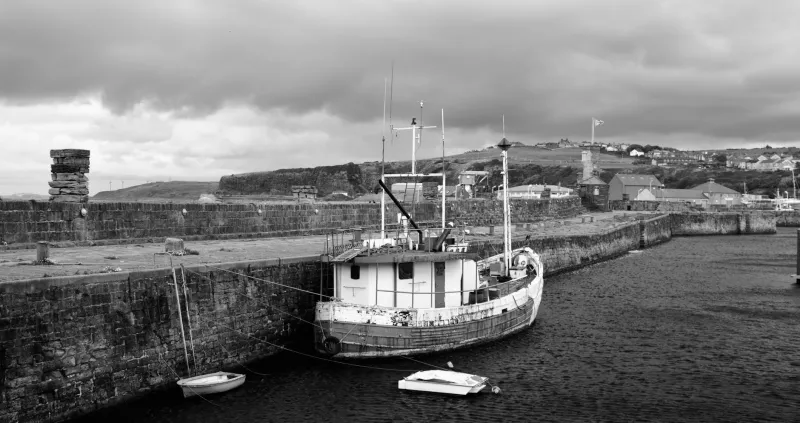
Stand at Dunbeath harbour today, watching the gentle lap of waves against weathered stone, and it's hard to imagine the controlled chaos that once defined this stretch of Caithness coastline. Yet for the better part of a century, this tranquil spot pulsed with the rhythm of an industry that would shape not just the village's fortunes, but its very soul.
The herring boom that swept Scotland's eastern shores in the 19th century didn't bypass Dunbeath. Far from it. Between 1800 and 1900, what began as seasonal fishing expeditions evolved into a sophisticated operation that drew workers from across the Highlands and beyond. The 'silver darlings,' as herring were affectionately known, didn't just fill nets—they filled dreams.
The Rhythm of the Season
Each summer brought transformation. Dunbeath's population would swell as the herring fleet arrived, accompanied by an army of specialist workers whose skills were as essential as the fishermen themselves. The gutting stations that lined the harbour became hives of activity, where fisher-lasses—many travelling down from Shetland and the Western Isles—demonstrated knife skills that bordered on artistry.
These women could gut and pack a herring in seconds, their fingers moving with practiced precision that came from years of following the fleet from port to port. Working in teams of three, they'd process thousands of fish daily, sorting them by size and quality before packing them in salt-lined barrels. The rhythm of their work created its own music—the scrape of knives, the thud of fish hitting wooden boards, the creak of barrel hoops being fitted by coopers who worked alongside them.
Architecture of Abundance
Walk through Dunbeath today and the built environment still whispers stories of herring prosperity. The substantial stone cottages that line the streets weren't built by subsistence farmers—they're the legacy of successful fishing families who invested their seasonal earnings in permanent homes. Many feature the distinctive 'but and ben' layout, with separate entrances that allowed families to rent out rooms to visiting workers during the busy season.
The harbour itself bears witness to this maritime heritage. Those carefully constructed stone piers weren't built for pleasure craft—they were engineered to accommodate the dozens of fishing boats that would crowd the water during peak season. The curved breakwater, still protecting vessels today, was designed to shelter boats laden with silver cargo from the notorious North Sea swells.
Smoke, Salt, and Sustenance
The herring industry didn't just change Dunbeath's skyline—it revolutionised local food culture in ways that persist today. Traditional smoking houses, or 'kippers' as they were known locally, filled the village with aromatic clouds that signalled prosperity. The art of curing fish became both necessity and craft, with each family developing their own closely guarded techniques.
Local recipes still reflect this heritage. Visit any Dunbeath kitchen and you'll likely find variations on herring dishes that sustained generations of fishing families. Tatties and herring, soused herring, and the hearty fish broths that warmed workers through long harbour days—these weren't just meals, they were cultural expressions of a community built on the sea's bounty.
The Coopers' Craft
No account of Dunbeath's herring days would be complete without acknowledging the coopers—the skilled barrel-makers whose craft was essential to the entire operation. These artisans could fashion a watertight barrel from raw oak staves in a matter of hours, their workshops ringing with the sound of hammers shaping wood into perfect curves.
The cooperage that once stood near the harbour employed a dozen men during peak season, their finished barrels destined for markets across Europe. Each barrel bore the maker's mark—a guarantee of quality that Dunbeath coopers took seriously. Some of these marks can still be spotted on old barrels repurposed as garden planters throughout the village.
Decline and Transformation
The herring boom couldn't last forever. By the early 20th century, over-fishing and changing migration patterns began to thin the silver shoals. The development of steam trawlers based in larger ports gradually drew business away from smaller harbours like Dunbeath. Two world wars disrupted traditional markets and claimed many of the young men who might have continued family fishing traditions.
Yet the decline wasn't sudden—it was more like a slow tide ebbing away. Families adapted, turning to crofting, seeking work in the growing towns, or following new opportunities as Scotland's economy modernised. The harbour that once buzzed with commercial activity gradually became quieter, its stone walls now sheltering pleasure boats and the occasional creel boat rather than herring fleets.
Living Heritage
Today's visitors to Dunbeath can still connect with this maritime legacy in tangible ways. The Dunbeath Heritage Centre houses fascinating collections of fishing memorabilia, including photographs that capture the herring boom at its height. Old net needles, gutting knives, and cooper's tools tell stories of skilled hands and seasonal rhythms.
Local walking trails incorporate interpretation boards that help visitors understand what they're seeing—why certain buildings were positioned just so, how the harbour layout served its commercial purpose, and where the smoking houses once sent their aromatic signals across the village.
The herring may have moved on, but their legacy remains woven into Dunbeath's fabric. In the stone walls that still stand firm, the recipes that still warm Highland kitchens, and the harbour that still welcomes boats to safe shelter, the silver darlings continue to shape this corner of Caithness. For visitors willing to look beyond the surface tranquillity, Dunbeath's waters still shimmer with stories of the fish that built a community.