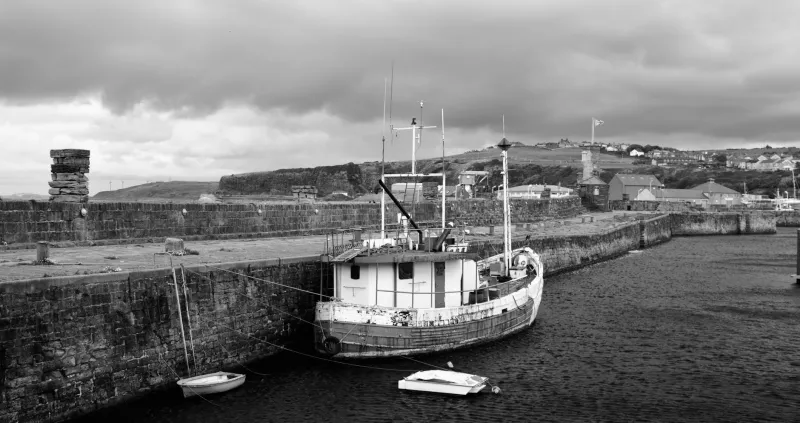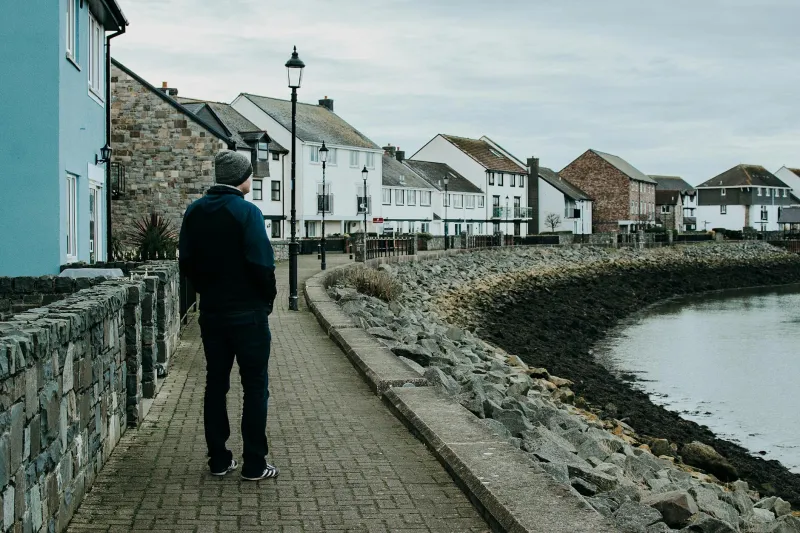
Walk through Dunbeath today and you're stepping through layers of maritime memory. Every weathered stone tells a story of nets and tides, of families who lived by the rhythm of the sea. But the fishing heritage here isn't just about boats bobbing in the harbour – it's woven into the very fabric of how this Highland village looks, feels, and tastes.
Windows to the Sea
The cottages that line Dunbeath's streets weren't built by chance. Their distinctive low profiles and thick stone walls speak of generations who understood the North Sea's moods. Step closer to these whitewashed homes and you'll notice something curious – many still bear the faint impressions of iron rings embedded in their walls, remnants of when nets were stretched here to dry and mend.
These weren't just homes; they were workshops where the smell of tar and salt hung heavy in the air. The narrow windows, often dismissed as quaint Highland charm, served a practical purpose – they reduced heat loss during those long winter months when fishermen worked by lamplight, preparing gear for the next season's catch.
The village layout itself tells the tale. Notice how the older cottages cluster in tight rows, their gable ends facing the sea? This wasn't coincidence but centuries of hard-won wisdom. When Atlantic storms battered the coast, these stone sentinels stood firm, their backs turned against the wind whilst their occupants waited for calmer waters.
Smoke and Salt: The Curing Legacy
Behind many of these cottages, keen eyes can still spot the foundations of old curing sheds – low, rectangular outlines where Dunbeath's famous herring were transformed from silver fish into golden currency. The process required precise knowledge passed down through generations: the right balance of salt, the perfect smoking temperature, the exact timing that turned a day's catch into food that could last months.
The distinctive smell hasn't entirely faded. On still mornings, when mist rolls in from the sea, locals swear you can still catch hints of that ancient alchemy – woodsmoke and brine, patience and skill. Some of the older residents remember their grandmothers' hands, permanently stained amber from handling kippers, moving with practised precision through clouds of sweet-scented smoke.
Today, only fragments remain of this once-mighty industry. But look carefully near the harbour and you'll find one or two buildings where the blackened roof beams still tell their smoky stories. The stone floors, worn smooth by generations of feet, bear the subtle stains of an industry that once employed half the village.
Recipes from the Tide
In Dunbeath's kitchens, the fishing legacy lives on in flavours that have travelled through time. Local families still guard recipes that their great-grandmothers developed to make the most of uncertain catches. These aren't dishes you'll find in fancy restaurants – they're the honest food of people who understood that nothing from the sea should ever be wasted.
Cullen skink gets a Dunbeath twist here, enriched with whatever vegetables grew in the salt-sprayed gardens behind those stone cottages. Fishcakes stretch precious protein with locally grown potatoes, whilst traditional fish soups simmer with herbs that somehow thrive in this coastal climate.
The real treasures are the preservation techniques still whispered between neighbours. Methods for salt-curing small catches, for smoking fish in makeshift setups that would make food safety inspectors weep, for creating fish stocks so rich they could sustain a family through lean times.
Living Heritage for Modern Visitors
You don't need a time machine to connect with Dunbeath's fishing soul. Start at the harbour in the early morning when local boats still bring in their modest catches. The fish van that tours the village twice weekly continues a tradition stretching back centuries – though today's refrigerated truck has replaced the horse-drawn cart.
For the freshest taste of this heritage, seek out Mrs MacLeod's fish counter at the village shop. She still prepares traditional cures and can tell you which boat caught your dinner. Her smoked haddock, prepared using methods her grandmother taught her, offers a direct link to Dunbeath's smoky past.
The old curing shed foundations make for fascinating exploration, especially near sunset when the light picks out details invisible at midday. Bring a torch and look for the iron hooks still embedded in stone walls – these once held the wooden frames where hundreds of herring hung in neat rows.
Traces in Stone and Memory
Wander the clifftop paths above the village and you'll discover the quarries where Dunbeath's builders found their stone. The particular sandstone they favoured weathers to a warm honey colour that glows in Highland light – but more importantly, it withstood decades of salt spray without crumbling.
Even the village cemetery tells fishing stories. Weathered headstones record lives lost to sudden squalls, families sustained by patient wives who mended nets whilst their men chased shoals. The symbols carved here – anchors, fish, coiled ropes – speak a language that transcends words.
In Dunbeath, the sea's influence extends far beyond the tide line. It shaped how people built their homes, preserved their food, and structured their lives. Today's visitors can still taste that legacy, still see it in stone and timber, still breathe it in the salt-touched air that carries whispers of a thousand fishing seasons.