A Fortress Born from Stone and Necessity
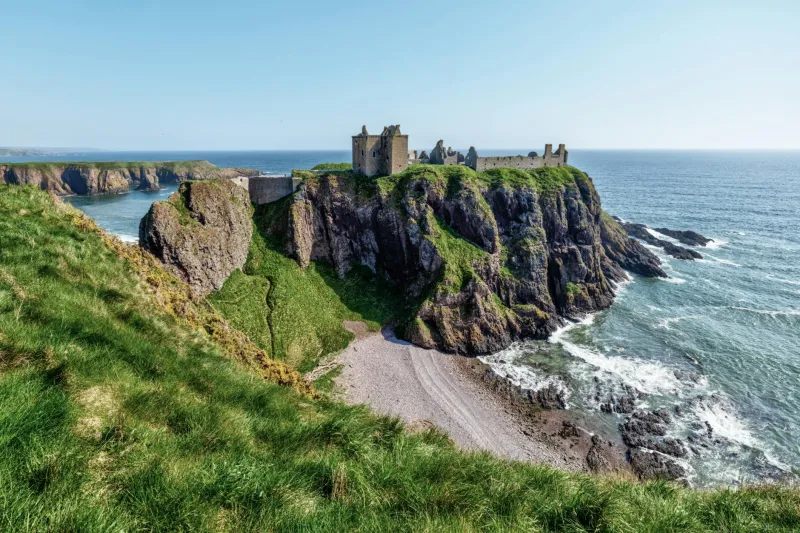
Where the North Sea crashes against Caithness's unforgiving coastline, Dunbeath Castle emerges from the clifftops like something conjured from Highland legend. This isn't your typical tourist-friendly castle with manicured grounds and gift shops. Instead, it's a brooding testament to survival, where every weathered stone tells stories of medieval power struggles, clan vendettas, and the relentless march of Scottish history.
Built in the 15th century by the Sinclair family, Dunbeath Castle was never meant to be pretty. It was designed to intimidate, defend, and endure. The original tower house rose from the cliff edge with a single purpose: to control this stretch of Scotland's northern frontier when control meant the difference between prosperity and annihilation.
The Sinclairs: Masters of the Northern Realm
The Sinclairs didn't just build Dunbeath Castle; they carved their dynasty into its very foundations. As Earls of Caithness, this Norman-Scottish family understood that power in the Highlands required both political cunning and architectural might. Their castle became the nerve centre of a domain that stretched across some of Scotland's most remote and strategically vital territory.
William Sinclair, the 2nd Earl of Caithness, transformed Dunbeath from a simple stronghold into a sophisticated seat of power during the 16th century. Under his guidance, the castle evolved beyond its military origins, incorporating residential quarters that reflected the family's growing wealth and influence. Yet even these domestic additions retained the fortress's fundamental character – thick walls, narrow windows, and defensible positions that could withstand both North Sea storms and human adversaries.
The Sinclair legacy at Dunbeath wasn't built on diplomacy alone. Family chronicles record bitter feuds with neighbouring clans, particularly the Sutherlands and Mackays, that occasionally erupted into full-scale warfare. The castle's strategic position made it both a target and a launching point for these Highland conflicts, its walls bearing witness to sieges, betrayals, and the occasional act of spectacular revenge that characterised clan politics.
Jacobite Shadows and Secret Loyalties
By the 18th century, Dunbeath Castle found itself at the heart of Scotland's most dangerous political gamble. The Jacobite cause – the attempt to restore the Stuart monarchy – divided Highland families and turned castles like Dunbeath into centres of clandestine activity.
The Sinclairs' relationship with the Jacobite movement was complicated, reflecting the impossible choices facing Highland nobility. While publicly maintaining loyalty to the Hanoverian crown, evidence suggests that Dunbeath served as a safe house for Jacobite messengers and a storage point for weapons destined for Prince Charles Edward Stuart's campaign.
Local tradition maintains that secret chambers within the castle walls concealed correspondence between Highland chiefs and French agents, though the family's official records diplomatically omit such details. This careful balance between public loyalty and private sympathy exemplified the precarious position of many Highland families during this tumultuous period.
Architectural Evolution: From Fortress to Family Home
Dunbeath Castle's architecture tells the story of Scotland's transformation from medieval feudalism to modern statehood. The original 15th-century tower house – a stark, defensive structure – gradually expanded to include more comfortable living quarters as the need for constant military readiness diminished.
Eighteenth-century additions softened the castle's martial appearance without compromising its dramatic clifftop presence. Large windows replaced arrow slits, formal gardens appeared where defensive ditches once scarred the landscape, and interior modifications created the kind of refined living spaces expected by Scotland's evolving aristocracy.
Yet the castle never entirely shed its fortress identity. The great hall retained its medieval proportions, the spiral staircases maintained their defensive advantages, and the walls kept their intimidating thickness. Visitors today can still trace the building's evolution from medieval stronghold to Georgian country house, each architectural layer revealing different chapters in Highland history.
The Decline and Resurrection
The 19th century brought challenges that medieval siege warfare had never posed. Economic pressures, changing social structures, and the gradual decline of the clan system left many Highland castles without purpose or resources for maintenance. Dunbeath faced the same crisis that claimed countless Scottish strongholds during this period.
The Sinclair family's financial difficulties forced the sale of Dunbeath Castle in the early 1900s, ending centuries of continuous occupation. For decades, the building stood empty, its roof deteriorating and its interiors slowly surrendering to Highland weather. Local residents watched with resignation as another piece of their heritage crumbled into romantic ruin.
Salvation arrived in the form of private purchasers who recognised the castle's historical significance and architectural importance. Careful restoration work has stabilised the structure while preserving its authentic character, ensuring that Dunbeath Castle continues to dominate its clifftop position as it has for over five centuries.
Visiting the Castle: A Journey Through Time
Today's visitors to Dunbeath Castle encounter a building that remains true to its origins while offering glimpses into the complex history that shaped this corner of Scotland. The approach alone – a winding path that follows the cliff edge – recreates something of the medieval experience of approaching this formidable stronghold.
The castle's interior reveals layers of history through architectural details, from medieval stone carving to Georgian plasterwork. Each room tells part of the Sinclair story, while the views from the upper floors encompass the same seascape that medieval lookouts once scanned for approaching threats.
For history enthusiasts, Dunbeath Castle offers something increasingly rare: an authentic encounter with Scotland's past that hasn't been sanitised for mass tourism. The building's continuing role as a private residence means that visits require advance arrangement, but this limitation preserves the intimate atmosphere that makes the castle's history feel immediate and personal.
The Castle's Enduring Legacy
Dunbeath Castle stands as more than just another Highland ruin made good. It represents the resilience of Scottish heritage and the ongoing effort to preserve the physical landmarks that anchor our understanding of the past. In a landscape where so many castles have vanished entirely, Dunbeath's survival feels both miraculous and essential.
The castle's story continues to evolve, its current custodians adding their own chapter to a narrative that began with medieval masons and will hopefully continue for generations to come. For visitors to this remote corner of Caithness, Dunbeath Castle offers something that no museum or heritage centre can replicate: the authentic presence of history, standing proud against the northern sky exactly where Scottish builders placed it more than five centuries ago.