The Arrival: Still Running on City Time
I stepped off the bus in Dunbeath at 3:47pm on a Friday, and my first instinct was to check my phone for the next thing on my agenda. There wasn't one. For someone accustomed to scheduling life in fifteen-minute increments, this absence of immediate obligation felt oddly unsettling. The village street stretched quietly before me, unhurried and unapologetic about its lack of urgency.
London had followed me north in my head – the mental soundtrack of tube announcements, the unconscious quickening of pace at pedestrian crossings, the habitual glance at my watch every few minutes. Even here, surrounded by stone cottages and the distant sound of waves, I found myself walking with purpose towards... nothing in particular. Old habits, it seems, die hard.
The Dunbeath Strath Hotel receptionist smiled when I asked about evening entertainment options. "Well," she said thoughtfully, "there's the sunset. That's usually quite good." It took me a moment to realise she wasn't being sarcastic.
The First Evening: Learning to Watch Weather
By six o'clock, I'd unpacked, explored the village centre (a five-minute walk), and was confronting the unfamiliar prospect of several unstructured hours before bedtime. In London, this would trigger a frantic search for activities, restaurants, events – anything to fill the perceived void. Here, I found myself simply sitting by my bedroom window, watching clouds gather over the sea.
This wasn't boredom – it was something I'd almost forgotten existed. Stillness. Not the forced stillness of meditation apps or mindfulness exercises, but the natural quiet that emerges when you stop trying to fill every moment with purpose.
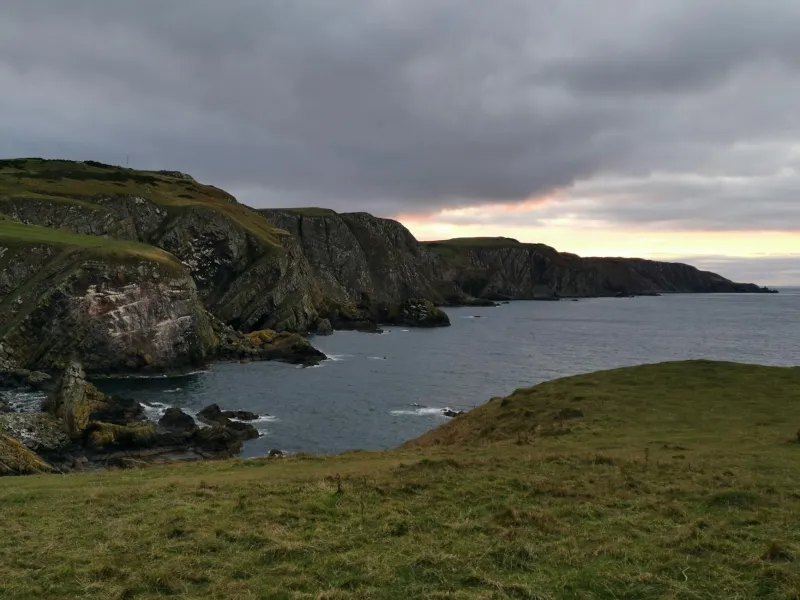
The promised sunset arrived with theatrical drama, painting the sky in colours that my phone camera couldn't capture and my Instagram-trained eye couldn't adequately frame. For the first time in months, I watched something beautiful without immediately trying to document it. The moment felt more vivid for remaining unshared.
Dinner at the hotel restaurant operated on what I'd soon recognise as Highland time – meals appeared when they were ready, not when ordered, and conversations with other diners developed naturally rather than being rushed by the next seating. The pace felt frustratingly slow initially, then surprisingly comfortable.
Saturday Morning: The Tides Take Charge
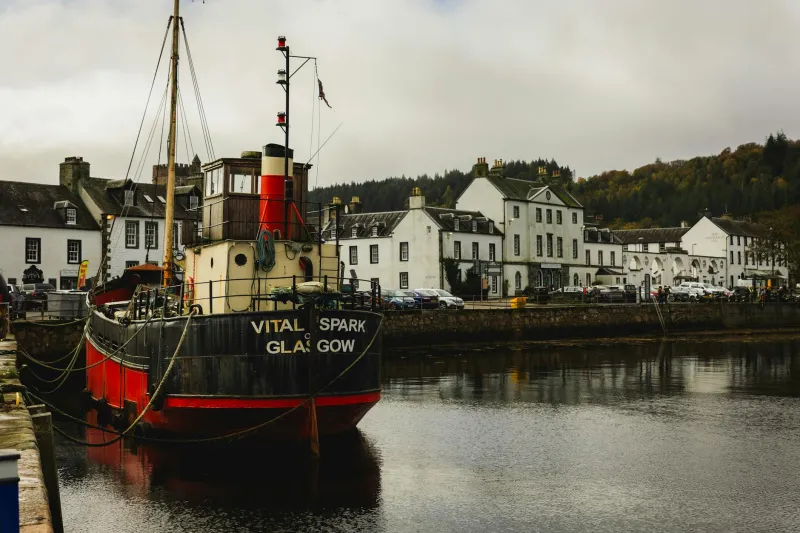
I woke without an alarm for the first time in years, my body apparently deciding that 7:30am was appropriate. Outside, the harbour looked completely different from the previous evening – the tide had retreated, revealing a landscape of pools and seaweed that seemed like an entirely new geography.
This was my first lesson in Dunbeath time: the village operates on rhythms older and more reliable than human schedules. The tide doesn't care about your plans. The weather doesn't accommodate your agenda. The light changes when it changes, not when convenient.
I'd planned to walk the coastal path, but found myself instead sitting on the harbour wall, watching the gradual return of water to the rocky pools below. A local fisherman mending nets nearby occasionally offered observations about the weather, the season, the likely behaviour of the afternoon tide. These weren't conversations in the London sense – purposeful exchanges with clear beginnings and endings – but gentle meanderings that started and stopped as naturally as breathing.
The Art of Productive Wandering
By Saturday afternoon, something had shifted. I found myself walking without destination, following paths simply because they looked interesting rather than because they led somewhere specific. This felt revolutionary for someone whose London walks are typically goal-oriented missions between tube stations.
The path along Dunbeath Water led me through a landscape that seemed designed for contemplation. The sound of running water provided a natural soundtrack, punctuated occasionally by bird calls I couldn't identify but somehow didn't feel compelled to look up on my phone. The urgency to categorise and document every experience was gradually fading.
 Photo: Dunbeath Water, via www.berriedale-dunbeath.org
I discovered the ruins of an old mill, not through research or planning, but simply by following the sound of water and curiosity. This accidental archaeology felt more rewarding than any scheduled tourist attraction. Time moved differently here – I might have spent twenty minutes or two hours exploring the stone remains. Without constant clock-checking, duration became irrelevant.
Saturday Evening: The Social Rhythm
The hotel bar filled gradually as evening approached, locals appearing as if summoned by some invisible signal. I learned later that this gathering happens naturally most Saturday nights – not through formal arrangement, but through the kind of social rhythm that develops in communities where people actually know each other.
Conversations flowed at Highland pace – thoughtful, unhurried, with comfortable silences that would feel awkward in London but seemed natural here. Stories emerged slowly, often prompted by the weather, the season, or shared memories of the village's past. I found myself contributing to discussions about topics I'd never considered – the behaviour of seals, the best time for gathering mussels, the way winter light differs from summer light.
This wasn't networking or social performance – it was something I'd almost forgotten existed. Community. The simple pleasure of sharing space and conversation with people who weren't trying to impress each other or advance any agenda beyond human connection.
Sunday Morning: Internal Weather Systems
I woke on Sunday with a strange sensation – I felt rested. Not just physically recovered from sleep, but mentally settled in a way that expensive spa treatments and meditation retreats had failed to achieve. The constant low-level anxiety that I'd come to accept as normal had simply... disappeared.
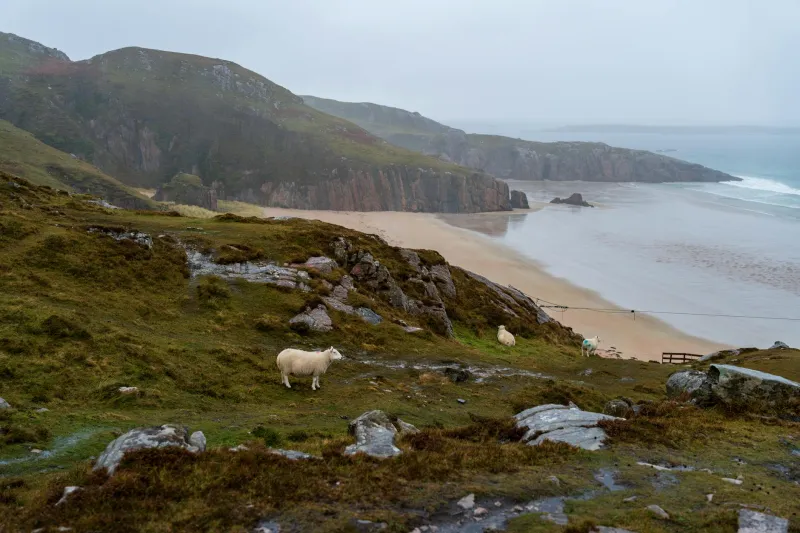
The morning was overcast with occasional drizzle – weather that would have felt oppressive in London but somehow suited the landscape here. I realised I was beginning to appreciate weather as something to experience rather than endure. The mist rolling in from the sea wasn't an inconvenience but a performance, transforming the familiar coastline into something mysterious and new.
Walking became meditation without effort. My pace had naturally slowed to match the rhythm of waves and wind. The compulsive mental planning that usually accompanies my movements – calculating routes, estimating times, anticipating obstacles – had quieted into simple awareness of the present moment.
The Departure: Carrying Highland Time Home
As I waited for the bus on Sunday afternoon, I noticed something remarkable. I wasn't anxious about the journey ahead or already mentally transitioning to Monday morning's obligations. For the first time in years, I was fully present in the moment of departure rather than already living in the next destination.
Dunbeath had taught me that slowing down isn't about moving more slowly – it's about moving more deliberately. It's the difference between rushing through experiences and allowing them to unfold naturally. Between filling time and inhabiting it.
The village operates on what I'd come to think of as organic time – rhythms determined by natural cycles rather than artificial schedules. Tides, weather, seasons, and social needs create a temporal framework that feels more human than the relentless digital countdown that governs urban life.
What I'm Taking Back to London
Two days in Dunbeath won't permanently cure the pace of modern life, but they've reminded me that alternative rhythms exist. That conversations can develop without agenda. That beauty doesn't always need to be captured and shared. That sometimes the most productive thing you can do is absolutely nothing.
Most importantly, I've remembered that time isn't something to be conquered or optimised, but something to be experienced. In Dunbeath, I rediscovered the difference between being busy and being alive – a distinction that urban life makes increasingly difficult to maintain.
The Highland rhythm stays with you, even after you leave. It's there in the momentary pause before checking your phone, in the impulse to watch clouds rather than television, in the growing awareness that the most important things in life rarely happen on schedule. Dunbeath doesn't just offer a break from the pace of modern life – it reminds you that there are other ways to move through the world entirely.