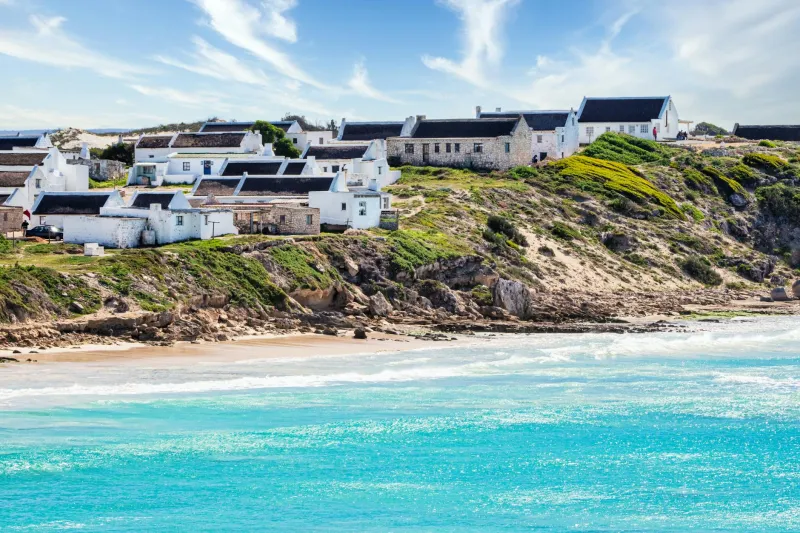
Walk through Dunbeath today and you're stepping through an open-air museum of Highland building craft, where every stone wall and cottage corner tells a story of remarkable local ingenuity. This isn't just another pretty Scottish village – it's a living testament to how communities once built their world from whatever the land provided, creating something uniquely beautiful in the process.
The Foundation of Everything: Caithness Flagstone
The secret to understanding Dunbeath's distinctive character lies beneath your feet. The village sits atop some of Scotland's finest flagstone deposits, and for centuries, locals have been splitting, shaping, and laying these remarkable grey slabs that seem to capture the very essence of the northern sky.
Unlike the granite you'll find further south in the Highlands, Caithness flagstone splits naturally into flat, workable pieces. Walk along any cottage row in the village and you'll notice how the stone seems to flow seamlessly from foundation to gable end, creating buildings that appear to have grown from the earth itself rather than being imposed upon it.
Local historian Margaret Sinclair, whose family has lived in the strath for five generations, explains the stone's significance: "My great-grandfather could tell you the exact quarry a piece of flagstone came from just by its colour and grain. Each site had its own character – some stones were better for roofing, others for walls that needed to withstand the Atlantic winds."
Reading the Village Like a Book
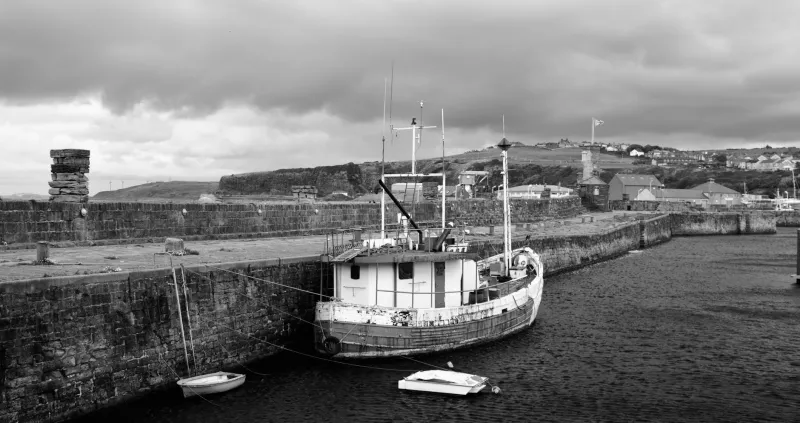
Start your architectural exploration at the harbour, where massive flagstone blocks form sea walls that have weathered decades of North Sea storms. Notice how the builders laid these stones without mortar in many places, relying instead on precise fitting and the stone's natural weight to create structures that flex with the elements rather than fighting them.
Move inland towards the cottage rows, and you'll spot the telltale signs of traditional Highland construction everywhere. Look for the distinctive 'through stones' – long pieces of flagstone that run completely through a wall from inside to outside, acting as natural ties that prevent the structure from bulging outward under the roof's weight.
The gable ends tell their own stories too. Many of Dunbeath's older cottages feature crow-stepped gables – those distinctive stair-like edges that aren't just decorative flourishes but practical solutions for a climate where rain drives horizontally and snow piles deep. Each step sheds water away from the wall while providing a stable platform for maintenance work.
The Lost Art of Heather Thatch
While slate roofs dominate the village today, Dunbeath once bloomed with golden heather thatch. Until the early 20th century, most cottages wore thick caps of locally gathered heather, held down by ropes weighted with stones and refreshed each autumn after the harvest.
Only a handful of thatched buildings survive in the wider strath, but they're worth seeking out. The technique required intimate knowledge of the moorland – knowing which hillsides produced the longest, strongest heather stems, and exactly when to cut for maximum durability. A well-thatched roof could last fifteen years or more, providing superb insulation while creating that distinctive Highland cottage silhouette we see in old photographs.
Field Walls That Map History
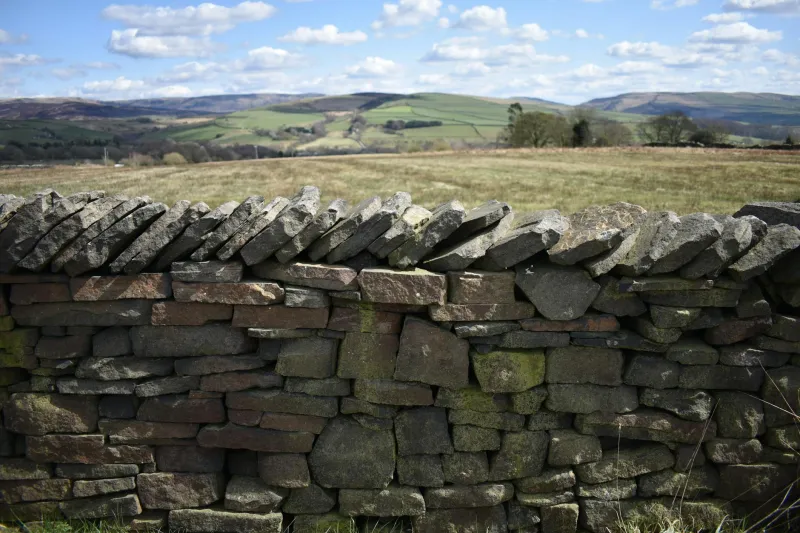
Venture beyond the village centre and Dunbeath's architectural story continues in its field boundaries. The dry stone walls that pattern the strath aren't random lines on the landscape – they're a readable map of centuries of agricultural development, clearances, and changing land use.
The oldest walls, often called 'consumption dykes,' were built during the 18th and 19th centuries partly as a way to clear stones from fields but also to provide employment during difficult times. Local communities would work together on these projects, and if you know what to look for, you can still spot the different building styles of various work gangs in the varying stone sizes and laying patterns.
Bridges, Steps, and Forgotten Infrastructure
Dunbeath's flagstone legacy extends to dozens of smaller structures that visitors often overlook. The village is dotted with stone bridges spanning the burn, each one carefully arched and fitted without cement. Many date back over a century but still carry modern traffic daily.
Look out too for the traditional stone steps cut into steep banks – practical solutions that allowed people and livestock to navigate the village's undulating terrain safely. Some of these steps show wear patterns from generations of use, their edges rounded smooth by countless footsteps.
Conservation Challenges and Victories
Maintaining this architectural heritage presents unique challenges. Traditional lime mortars behave differently from modern cement, and finding craftspeople who understand flagstone's quirks isn't always easy. However, recent restoration projects around the village have shown how traditional techniques can be revived and adapted for contemporary needs.
The Dunbeath Heritage Centre has been documenting building techniques and maintaining records of significant structures, ensuring that future generations will understand not just what was built here, but how and why.
Your Architectural Walking Tour
To fully appreciate Dunbeath's built heritage, allow at least half a day for a proper wander. Start early morning when the light brings out the subtle colour variations in the stone, and don't forget to look up – many of the most interesting architectural details are at roof level, from carved date stones to ingenious chimney designs.
Bring a camera, but more importantly, bring curiosity. Every wall junction, every carefully placed stone, represents decisions made by people who understood their materials and environment intimately. In Dunbeath, architecture isn't just about shelter – it's about belonging to a place so completely that your buildings become part of the landscape itself.